

In today’s search landscape, simply using the keyword is not enough. Search engines like Google are now smarter, more intuitive and more focused on understanding the meaning rather than just matching the exact phrases. This shift has placed semantic SEO at the centre of modern optimization strategies. No matter if you want to rank higher, improve the search engine invisibility or become the best semantic SEO writer in your industry, understanding how semantic search works is very important.
In this detailed guide, we will explain to you all the things you must know about semantic SEO, semantic markup, keywords, search intent and how to build a winning semantic search engine optimization strategy in 2025.
Semantic SEO – Basic Understanding
Semantic SEO is the process of optimizing the content based on meaning, context and user intent not just the keywords. Instead of focusing on exact match search terms, semantic search engine optimization uses the related concepts, entities, topics and the contextual signals so search engines can clearly understand what your content is about.
Google no longer ranks the pages just because they use a keyboard many times. It now ranks the pages that provide the deeper coverage using the semantic relationships.
Semantic search engine optimization will help you with these things
- Match every layer of user intent
- Rank for more long tail and contextual keyword
- Improve topical authority
- Increased organic visibility
That’s why so many brands are now looking for the best semantic search engine optimization consultants, who are the professionals that understand not just the keywords but the relationships between the concepts.
What is Semantic Search
To understand semantic search engine optimization we must have to first understand semantic search.
Semantic search is Google’s method of understanding the intent, context and meaning behind the user query. Instead of looking at the keyword, Google analyzes the following things.
- Relationships between terms
- Search intent
- User behaviour pattern
- Topic depth
- Entities like people, places, brands and concept
- Synonyms and related phrases
For example if you search for the apple store near me then google will not return results about fruit
Semantic search identifies an apple ( a brand name) and store near me, is intent for a physical store. This is the core of modern Google search semantic search engine optimization .
What Are Semantic Terms In SEO?
Semantic terms are the related words, synonyms, phrases, concepts and the conceptual topics that will help the search engine to understand your content more deeply.
For Example:
Primary Keyword – semantic SEO
Semantic Terms
- Topical relevance
- Natural language understanding
- Search intent
- Contextual keywords
- Semantic relationships
- Ontology and entities
- Structured data
Using the semantic terms makes your content richer, clearer, and more aligned with what Google expects. These LSIs style supportive concepts will help a search engine map your page to the right query.
Semantic Markup SEO – Basic Understanding
Semantic markup SEO refers to using the structured data and HTML semantic tags to help Google understand the meaning and purpose of your content.
Let’s have a look at the examples of semantic markup:
- Schema.org structured data
- <article>, <header>, <footer> tags
- FAQ schema
- Product schema
- How-To schema
Semantic Markup Enhances
- Search visibility
- Featured snippet eligibility
- Rich results
- Google’s ability to crawl and interpret the content
When you combine the semantic search engine optimization and semantic markup SEO then this will be one of the strongest strategies for ranking in today’s search environment.
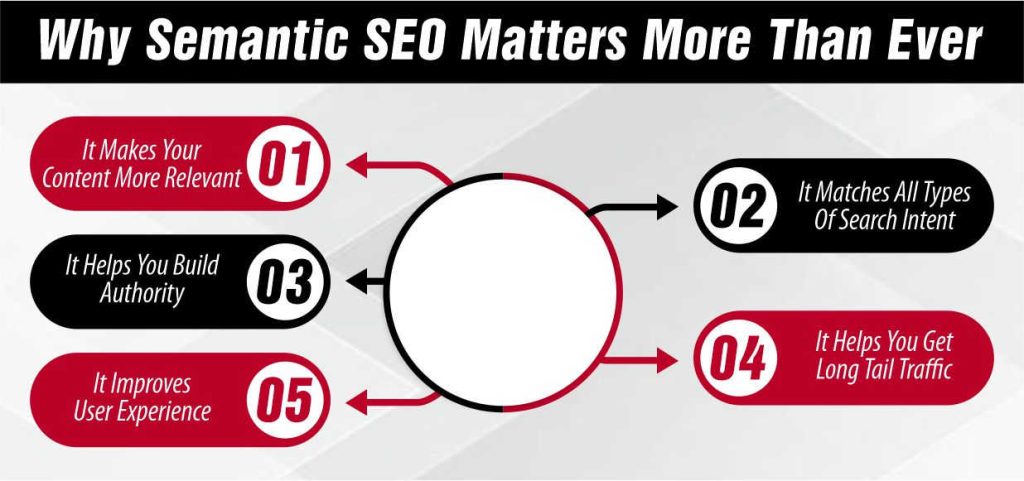
Why Semantic SEO Matters More Than Ever
Search engines have changed a lot. They no longer look at the exact keywords instead Google now tries to understand the meaning behind your content.
It Makes Your Content More Relevant
Semantic search engine optimization will help you to explain a topic fully. Google likes this and may rank your page higher.
It Matches All Types Of Search Intent
People don’t always type the exact words they mean. With semantic SEO, your content can still answer their questions.
It Helps You Build Authority
When your article covers the topic in many helpful ways then Google sees your website as a trusted expert.
It Helps You Get Long Tail Traffic
Semantic content naturally drags for many key variations even for long and specific ones.
It Improves User Experience
Better content will keep the readers interested, which also helps your ranking.
How Google Uses Semantics for Ranking
Google search algorithm uses several semantic technologies, including:
Knowledge Graph
Entities like people, events, brands and concepts.
Natural Language Processing
Understand the relationship, context and intent.
BERT and MUM Updates
Interpret the meaning behind the complex queries.
Topic Layers
Map content into topic clusters to evaluate the authority.
Importance Of Semantic Keywords in SEO
Semantic keywords strengthen the context, topic depth, content quality, relevant signals, featured snippet eligibility and higher ranking for variations. Instead of stuffing the keywords semantic keywords allow your content to appear natural and informational.
Examples of semantic keywords for semantic search engine optimization might include the contextual optimisation, search intent analysis, topic clusters, structured data, Google NLP and entity optimisation. These enrich your article while writing the search engine to do a deeper understanding.
Signs Of High Quality Semantic SEO Article
Available to my semantic SEO article will cover every major concept, yet uses the semantic terms naturally. It also includes the sub topics that will support the main theme, it shows the expertise and depth. It also includes structured data, answers the intent variations and provides the actionable value.
When To Hire The Best Semantic SEO Consultant
You should consider hiring an expert if your site struggles to rank despite publishing the content, if the competitors outrank you for every topic, if your content lacks depth or semantic structure, if you want to build a topical authority in your niche and you want to help implement the entity based SEO.
Consultant will understand how to combine the semantic markup SEO, keyword clustering, knowledge graph optimisation, topic authority Building and NLP friendly writing techniques. An expert can elevate your entire SEO strategy.
Final Thoughts
Semantic search engine optimization is the future of search optimization. It goes beyond the keywords and only focuses on the meaning, intent and the relationships. As search engines continue evolving, adopting a semantic search engine optimization strategy is no longer optional now it’s very important.
By combining the semantic keywords, topic clusters and semantic markup SEO give Google everything it needs to understand your content clearly and rank it confidently.
Boost your rankings with powerful semantic search engine optimization. Let Phoenix optimize your content, strengthen your topics and drive higher visibility today.
FAQ’s
What is Semantic SEO?
Semantic SEO is an approach that will focus on the meaning, context and the user intent rather than relying on the exact keywords match.
How does semantic search work in Google?
Google Uses AI, NLP and the knowledge graph to understand user intent, related concepts and relationships between the topics to deliver the more accurate results.
Why are semantic keywords important for SEO?
Semantic keywords help the Google to understand the context, improve the topic relevancy and increase your chances of ranking for multiple related searches.
What is Semantic Markup SEO?
Semantic markup SEO uses the structure data and meaningful HTML tags to help the search engines to understand your content and qualify for rich results.
How can I create a strong Semantic SEO strategy?
You have to focus on the topic clusters, user intent, semantic terms, structured data and in-depth content that covers all the related questions and concepts.