


More than half of websites fail to rank on Google because of hidden SEO problems. These issues do not show on the surface. Many site owners do not know how to do an seo audit, so these problems stay unnoticed for months. Pages load slowly. Links break. Content does not match search intent. Over time, rankings drop and traffic slows down.
At Phoenix Dial, we handle SEO checks for service-based businesses every day. Our expert team knows where to look and what to fix first. We follow a clear process to find errors, improve pages, and boost visibility. In this guide, you will learn how to do an seo audit of your website step by step and understand what truly helps your site grow with confidence.
What is an SEO Audit?
An seo audit is a full check of a website to see how well it follows search engine rules. It helps you understand what works and what needs fixing. Many people ask what is seo audit because they want better rankings and steady traffic.
The seo audit definition is simple. It is the process of reviewing your website’s technical setup, content quality, and overall SEO health. This check looks at site speed, page structure, keywords, and indexing issues.
When you audit seo, you find problems that block search engines from reading your pages correctly. These problems can reduce visibility and lower trust. This is why many site owners ask why you need an seo audit before making SEO changes.
A proper seo audit gives clear insights. It shows weak pages, missing SEO elements, and technical errors. Once you know these issues, you can plan fixes that improve rankings and user experience.
How Important Is an SEO Audit?
An seo audit helps Google understand your website better. Search engines read structure, content, and signals to rank pages. When you review your site often, you make it easier for Google to crawl and index your pages.
A regular seo audit finds errors that block rankings. These errors include broken links, missing tags, and poor page setup. When you audit seo, you catch these problems early and prevent ranking drops.
An audit also improves website speed and user experience. Slow pages push users away and hurt trust. Learning how to do an seo audit helps you spot speed issues and fix them before they affect traffic.
Search rules change often. A strong seo audit keeps your site updated with these changes. It ensures your pages follow current guidelines and avoid penalties.
An audit clearly shows what works and what does not. You see which pages perform well and which need improvement. This clarity explains why you need an seo audit before making SEO decisions.
Types of Audits
An SEO audit is more than just one check. It has different kinds of audits that look at different parts of a website. Each type helps you learn more about your site and find problems that hurt your rankings. It’s easier to plan improvements and keep track of results when you know the different types.
Technical SEO Audit
The backend and structure of the website are the main things that a technical SEO audit looks at. It looks at things like how fast the site loads, how easy it is to use on a mobile device, security (HTTPS), indexing, and crawl errors. Fixing these technical problems is important because they can make it hard for search engines to read your pages correctly.
On-Page SEO Audit
An on-page SEO audit checks each page to see how well it is optimised. It checks the use of keywords, page titles, headings, meta descriptions, and URL structure. This kind of audit makes sure that every page is clear, useful, and easy for search engines to read.
Off-Page SEO Audit
An off-page SEO audit looks at everything that affects your rankings that isn’t on your website. This includes social signals, backlinks, and mentions of your brand. Search engines will see your website as more trustworthy and authoritative if you check the quality and relevance of links.
Content SEO Audit
A content SEO audit looks at how well your website’s content works and how good it is. It finds pages that are out of date, have duplicate or thin content, or are missing information. An SEO audit can help you improve your content, which can lead to more user engagement and higher rankings.
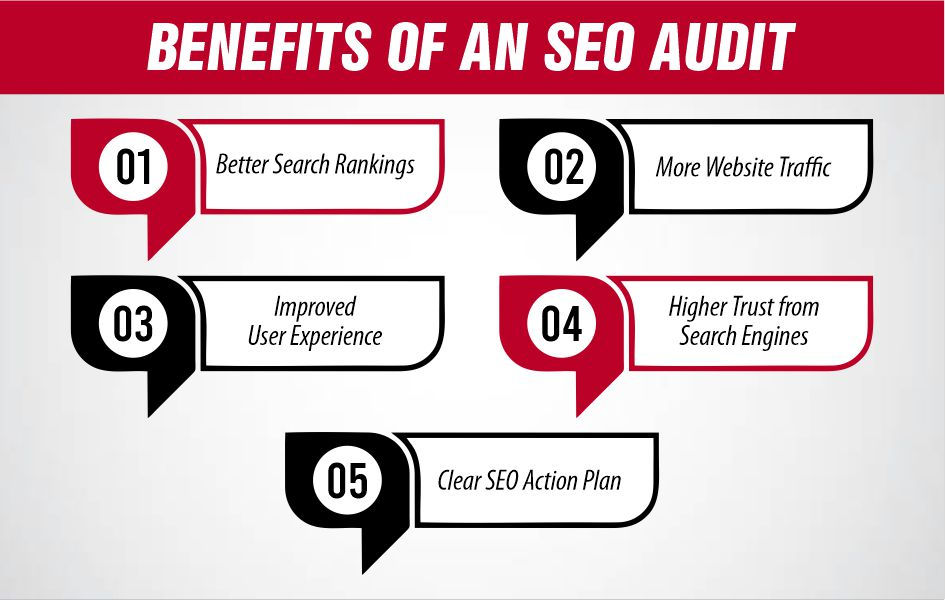
Benefits of an SEO Audit
There are a lot of benefits to doing an SEO audit on your website. It helps you figure out what your site does well and what it doesn’t, as well as what needs to be better. You can make smart choices that boost performance and visibility by regularly checking your website.
Better Search Rankings
An SEO audit finds problems that keep your pages from moving up in the rankings. By fixing these issues, your site can show up at the top of search results and get more visitors.
More Website Traffic
Fixing mistakes and optimizing pages makes your website easier for both people and search engines to find. This naturally brings in more visitors to the website and possible customers.
Improved User Experience
A good audit shows pages that load slowly, links that don’t work, and navigation that is hard to understand. Visitors will stay on your site longer if you fix these problems.
Higher Trust from Search Engines
Websites that follow SEO best practices get better rankings in search engines. A full SEO audit makes sure that your site is trustworthy and authoritative, which makes search engines trust it more.
Clear SEO Action Plan
An SEO audit makes a plan for how to make things better. It tells you what problems to fix first and what strategies to focus on. This gives you a clear plan for what to do with SEO to boost your rankings and the overall performance of your website.
How to Perform an SEO Audit
Knowing how to perform seo audits is essential for improving website performance. A proper SEO audit reviews both technical and content elements to uncover issues that hurt rankings. It helps you identify what works, what doesn’t, and where to focus efforts to boost traffic and visibility.
Website Crawling
Website crawling is the first step in audit seo. It checks how search engines read your website pages. Tools scan your site to find errors, broken links, or pages that are not indexed. A good crawl ensures that all important pages are accessible to Google and other search engines. Understanding what is seo audit in this context helps you spot structural issues early.
Organic Traffic Analysis
Analyzing organic traffic helps you understand which pages bring visitors from search engines. By reviewing this data during an seo audit, you can see which strategies work and which pages need improvement. Knowing your traffic sources also shows why you need an seo audit to track growth over time.
Meta Optimization
Meta titles and descriptions are vital for SEO. A proper seo audit format includes reviewing these elements to make sure they match page content and target keywords naturally. Optimized meta tags improve both search engine understanding and user click-through rates.
Keyword Cannibalization
Keyword cannibalization happens when multiple pages compete for the same keyword. This can confuse search engines and lower rankings. Identifying and resolving this during content auditing by an seo company or on your own ensures that each page has a clear focus.
Indexing Issues
Indexing issues occur when search engines cannot read certain pages. Part of how to make seo audit report is to document pages that are missing from the index. Fixing these problems ensures all your important content is visible and rankable.
Duplicate Content
Duplicate content can hurt rankings and reduce trust with search engines. A thorough seo audit identifies repeated or copied content so you can remove, merge, or rewrite it to improve clarity and ranking potential.
Page Speed
Page speed is critical for SEO and user experience. Slow pages push visitors away and can lower rankings. Measuring and optimizing page speed is an essential part of professional seo audits.
Core Web Vitals
Core Web Vitals track important user experience metrics such as loading speed, interactivity, and visual stability. Improving these metrics during an seo audit ensures your site meets Google’s modern standards and provides a smooth experience for users.
Mobile Optimization
Mobile-friendly websites rank higher because most searches now come from phones or tablets. A seo audit checks mobile responsiveness and ensures all pages display correctly on different devices.
Broken Links
Broken links harm both user experience and SEO. Identifying them in your seo audit report allows you to fix or remove these links, which improves trust and prevents ranking drops.
Competitive Analysis
Competitive analysis examines how your website compares to others in your niche. This is part of how to do an seo audit of your website, helping you understand where competitors outperform you and which strategies you can adopt.
Sitemap Analysis
Sitemaps guide search engines to important pages on your site. During an seo audit, reviewing your sitemap ensures all key pages are included and organized correctly, which helps Google crawl your site efficiently.
Content Gap Analysis
Content gap analysis identifies topics your website is missing. Finding these gaps during an seo audit allows you to create new content that attracts more traffic, answers user queries, and improves relevance.
Conclusion
Any website that wants to get better rankings, more visitors, and a better user experience needs to do a proper SEO audit. You can find problems early and make a clear plan for how to fix them by looking at technical issues, the quality of your content, your backlinks, and the overall performance of your site. Regular audits make sure that your website follows the rules set by search engines and stays competitive in your field.
Want to make your website work better? Get a professional SEO audit from Phoenix Dial right now. Our team of experts will find all of your problems and give you practical ways to fix them so you can get more people to see your website. Click here to book your SEO audit right now and start moving up in the rankings and getting more visitors.
FAQ’s
Can ChatGPT do an SEO audit?
ChatGPT can guide you on how to do an seo audit, suggest steps, identify common SEO issues, and explain fixes. However, it cannot scan your website directly or access live data like a specialized SEO tool.
What are the 3 C’s of SEO?
The 3 C’s of SEO are Content, Code, and Credibility. Content refers to high-quality pages, Code refers to technical setup, and Credibility is about backlinks and authority.
Which tool is best for SEO audit?
Popular tools for seo audit include Ahrefs, SEMrush, Screaming Frog, and Google Search Console. These tools help check technical issues, backlinks, page speed, and keyword performance.
How to do an SEO audit – 7 steps for beginners with free tools?
- Crawl your website (use Screaming Frog free version).
- Check Google Search Console for indexing issues.
- Analyze page speed (Google PageSpeed Insights).
- Review meta titles and descriptions.
- Check mobile-friendliness (Google Mobile Test).
- Identify broken links and duplicate content.
- Analyze organic traffic and content gaps (Google Analytics).