

Over 70% of online buyers start their shopping journey on Google. This simple fact clearly shows why ecommerce seo matters more than ever today. When people search for products online, they rarely go past the first page of results. Many online stores struggle because their product pages never appear there. Low visibility leads to fewer clicks, low trust, and missed sales every day. This problem often happens due to poor site structure, weak content, or missing SEO basics.
At Phoenix Dial, our service-based company works with a skilled team that understands how search engines rank ecommerce stores. We help online sellers improve visibility, attract the right buyers, and grow sales without relying only on ads. In this post, you will learn what ecommerce SEO is, how it works, and how it helps your online store grow step by step in a simple and practical way.
What is ecommerce SEO?
ecommerce seo is the process of improving an online store so search engines can find it easily. It helps product pages and category pages appear in search results when people look for products online. This process focuses on making a website clear, fast, and useful for users and search engines.
Search engine optimization for ecommerce includes using the right words, improving page structure, and fixing technical issues. It also helps search engines understand what each page is about. When done well, e-commerce seo increases visibility, brings organic traffic, and supports steady sales growth.
Why SEO Is Important for Ecommerce Sellers in 2026
Online competition is growing fast every year. Thousands of new online stores launch daily, and many sell similar products. Without ecommerce seo, it becomes hard for buyers to find your store. Strong SEO helps your pages stand out in crowded search results.
Most buyers search on Google before buying anything online. They compare prices, read reviews, and check options first. If your store does not appear in these searches, you miss ready-to-buy customers. This is why “why is seo important for ecommerce” becomes a key question for sellers in 2026.
SEO brings free and long-term traffic to online stores. Unlike paid ads, traffic from ecommerce search engine optimization does not stop when the budget ends. Well-optimized pages can bring visitors for months or even years.
SEO also helps small sellers compete with big brands. Large companies have big ad budgets, but seo for ecommerce websites levels the playing field. With the right ecommerce seo strategy, even small stores can rank, get clicks, and grow sales steadily.
How Does E-Commerce SEO Work?
E-commerce SEO works by helping search engines find and understand your online store. Search engines like Google use automated tools called crawlers to scan websites. These crawlers look at your pages, links, and content to decide how relevant your store is for a user’s search.
Keywords play a key role in product searches. Using the right words in titles, descriptions, and headings tells search engines what your products are about. This helps your store appear when buyers search for those products.
Product pages and categories are very important for an ecommerce site. Clear structure and organized categories make it easier for search engines to index all your pages. Well-structured pages also help customers find what they need quickly.
Content on your site, such as product descriptions, buying guides, or FAQs, helps Google understand your store better. The more clear and helpful your content, the higher your pages can rank. Ecommerce seo optimization focuses on making content informative, easy to read, and relevant to buyers’ searches.
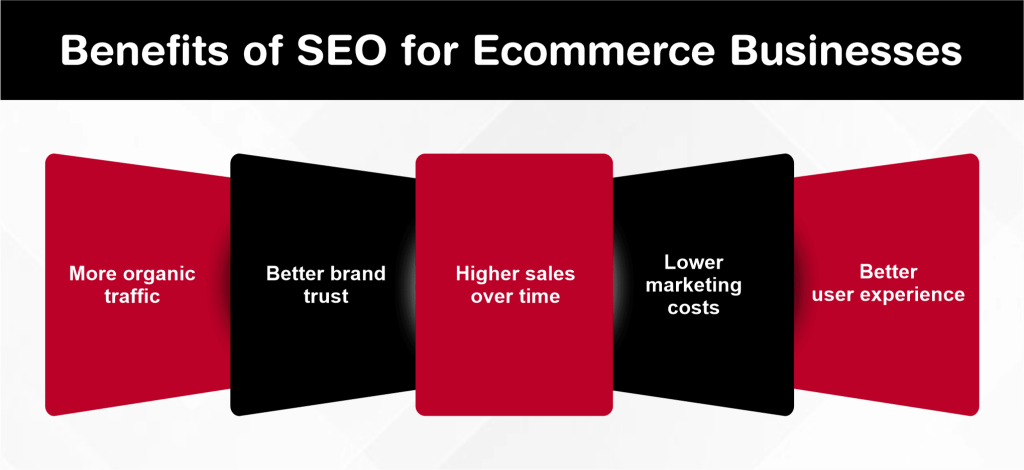
Benefits of SEO for Ecommerce Businesses
Ecommerce seo offers many advantages for online stores. It helps stores appear higher in search results, attract the right visitors, and grow sales naturally. SEO is not just about rankings—it improves visibility, credibility, and long-term business growth.
More Organic Traffic
SEO brings free visitors to your online store from search engines. By using the right keywords for ecommerce, your product pages and categories appear when buyers search for related items. Over time, this steady flow of traffic increases the chances of sales without paying for ads. Additionally, targeting long-tail keywords helps attract highly specific buyers who are more likely to purchase. Consistently updating your store with fresh content and optimized pages keeps traffic growing month after month.
Better Brand Trust
When your store appears at the top of search results, customers see it as more reliable. Ecommerce seo strategy improves content quality, page structure, and website credibility, helping buyers trust your brand. Clear product descriptions, customer reviews, and informative guides also build confidence in your store. Over time, appearing consistently in search results makes your store recognizable and encourages repeat visits.
Higher Sales Over Time
Optimized stores attract the right visitors who are ready to buy. With consistent traffic and clear product information, seo for ecommerce website helps increase sales steadily. SEO focuses on bringing buyers at every stage, from research to purchase, which leads to higher conversion rates. Unlike short-term ad campaigns, SEO builds long-term growth and creates a sustainable flow of customers who keep returning.
Lower Marketing Costs
SEO brings traffic without continuous ad spending. Unlike paid ads, which stop generating visitors when the budget ends, ecommerce search engine optimization keeps attracting users over time. Investing in SEO reduces reliance on expensive campaigns and increases the return on investment. Over time, organic traffic can surpass paid traffic in volume and quality, making your marketing more cost-effective.
Better User Experience
SEO improves not only search rankings but also site usability. Fast-loading pages, clear navigation, organized categories, and mobile-friendly design make shopping easier. A well-structured store keeps buyers engaged, reduces bounce rates, and increases conversions. SEO also encourages clear calls-to-action, simple checkout processes, and informative product pages, which together create a smooth and satisfying shopping experience.
Key Components in an E-Commerce SEO Strategy
A strong ecommerce seo strategy helps online stores rank higher in search results and attract the right customers. It combines different techniques that make your site easy for search engines to understand and valuable for buyers. Focusing on the main components ensures steady traffic, better visibility, and long-term growth.
1. Keyword Research
Keyword research is the foundation of seo for ecommerce. It involves finding the exact words and phrases buyers use when searching for products online. Choosing the right keywords ensures your product pages appear in relevant searches and reach the right audience. A good keyword strategy includes both short-tail keywords (like “shoes”) for broad traffic and long-tail keywords (like “men’s running shoes under $50”) to attract buyers who are closer to making a purchase.
Keyword research also involves analyzing search volume, competition, and buyer intent. For example, a keyword with high searches but too much competition might be harder to rank for, while a more specific keyword can drive highly targeted visitors. Regularly updating your keywords based on trends, seasonal demand, and customer behavior ensures your store remains visible and competitive.
2. On-Page SEO for Ecommerce
On-page SEO ensures every page on your store is optimized for both users and search engines. This includes writing clear product titles with relevant keywords, creating informative and original product descriptions, and using headings (H1, H2, H3) properly to organize content. Clean and simple URLs make pages easier to navigate and index, while descriptive image alt text helps both search engines and users understand visuals.
Internal linking is another key factor in seo for an ecommerce site. Linking related products, categories, or blog posts helps search engines understand your site structure and distributes ranking power across pages. Proper on-page SEO improves visibility, guides buyers through your store, and increases the likelihood of conversions.
3. Technical SEO Basics
Technical SEO focuses on the backend of your store to make it easy for search engines to crawl, index, and understand your site. Important elements include fast website speed, mobile-friendly design, and secure HTTPS connections. Slow-loading pages or unresponsive mobile sites can hurt rankings and lead to lost sales.
A well-structured sitemap and clear navigation allow search engines to discover all your pages quickly. Fixing broken links, redirecting old URLs, and avoiding duplicate content are other critical tasks for healthy ecommerce seo optimization. Technical SEO ensures your store runs smoothly for both users and search engines, creating a solid foundation for all other SEO efforts.
4. Content for Ecommerce SEO
Content goes beyond product descriptions. It includes blog posts, buying guides, FAQs, and comparison articles that provide valuable information to users. Well-crafted content helps search engines understand what your store and products are about. For example, a guide like “How to Choose the Best Running Shoes” can rank for informational queries while also linking to your product pages.
High-quality content attracts users who are searching for answers, educates them about your products, and builds trust. Integrating seo strategy for ecommerce websites into your content ensures your pages are optimized without sounding forced, making them useful for both search engines and potential buyers.
5. Link Building for Online Stores
Link building increases your store’s credibility and authority in search engines. Links from blogs, influencers, product reviews, or partner websites act as endorsements for your store. High-quality links signal to search engines that your store is trustworthy and relevant, which can improve rankings for competitive keywords.
Ecommerce search engine optimization emphasizes natural and trustworthy link-building practices rather than buying links. For example, sharing your products with niche bloggers or collaborating with industry partners can create organic backlinks. Over time, strong link building strengthens your site authority, drives referral traffic, and supports long-term SEO success.
Conclusion
Ecommerce SEO is no longer optional for online stores—it is a crucial part of growing a successful business in 2026. Optimizing your store for search engines helps attract the right customers, increase organic traffic, and improve sales over time. By focusing on key components such as keyword research, on-page SEO, technical SEO, quality content, and link building, your online store can compete with bigger brands and stand out in a crowded market.
The benefits of SEO go beyond just rankings. It builds trust with your audience, reduces marketing costs, and enhances the overall user experience on your website. With a proper ecommerce seo strategy, small and medium-sized stores can achieve long-term growth and sustainable success without relying solely on paid advertising.
At Phoenix Dial, our team of experts specializes in seo for ecommerce websites. We help online sellers optimize every aspect of their store, from product pages to technical setup, ensuring maximum visibility and steady growth. Whether you are just starting or looking to improve an existing store, our professional SEO services can guide your business to higher rankings and increased sales. Take the first step today and let Phoenix Dial help your online store reach its full potential with effective and results-driven ecommerce search engine optimization.
FAQ’s
How long does ecommerce SEO take?
Ecommerce SEO is a long-term strategy. Typically, noticeable results take 3 to 6 months, depending on competition, website size, and optimization quality. Some changes, like fixing technical issues, can show improvements faster, while building authority through content and links takes more time.
Is SEO better than paid ads?
SEO and paid ads serve different purposes. SEO brings long-term, free traffic that keeps growing, while paid ads give instant visibility but stop working once the budget ends. For sustainable growth, combining both is often effective, but SEO is more cost-efficient in the long run.
Can small ecommerce stores rank on Google?
Yes, small ecommerce stores can rank with the right ecommerce seo strategy. By targeting specific keywords, optimizing product pages, and creating helpful content, even smaller stores can compete with big brands and attract buyers organically.
Do I need technical skills for ecommerce SEO?
You don’t need advanced technical skills to start SEO. Basic knowledge of website structure, keywords, and content optimization is enough to make improvements. For more technical tasks, like site speed or structured data, you can either learn gradually or work with SEO experts to handle them.