


Did you know many businesses fail because they do not understand business development? Many business owners work hard every day, but they still struggle to grow. They feel stuck. They do not know how to find new clients or enter new markets. This confusion about what is business development creates a big problem. It slows down growth and leads to missed opportunities. Many people focus only on sales and ignore the bigger picture of development and business growth. Because of this, they fail to build a strong and stable future.
At Phoenix Dial, we understand these challenges. Our team of experts helps businesses create a clear and simple plan. We focus on the right business development strategy that brings real results. We guide you step by step. For example, if a small business is not getting leads, we help them improve their online presence and connect with the right audience. This approach makes growth easier and more predictable. We also help you understand your business development role so you can take the right actions with confidence.
In this post, you will learn the true business development meaning in simple words. You will also discover easy steps, real examples, and smart ideas to grow your business. Ready to understand how real growth works? Let’s get started.
What is Business Development?
Business development means growing a business by finding new ways to improve and expand. It focuses on creating new opportunities and making the business stronger over time. When people ask about the meaning of business development, they want to understand how a business moves forward, attracts more people, and increases its overall value.
It is not just about selling products or services. It is a bigger idea. It includes planning, building strong connections, and making smart decisions for the future. The business development process helps a business stay on the right path and avoid random actions that do not bring results. It gives clear direction and helps in steady growth.
In simple terms, business development connects different parts of a business. It brings together marketing, sales, and planning. This is why many people link it with business management and development. When everything works together, growth becomes easier and more stable.
Focus of Business Development
Getting New Customers
A key part of business development is finding new customers. A business cannot grow without new people coming in. This step focuses on reaching the right audience and turning them into interested buyers. It helps build a strong and growing customer base.
Building Partnerships
Another important area is building strong partnerships. In development and business, working with others creates more chances to grow. Good partnerships help businesses share resources, ideas, and opportunities. This makes growth faster and more effective.
Growing Revenue
The main goal of business development is to increase revenue. A business needs to earn more to survive and grow. A clear business development strategy helps improve income over time. It focuses on long-term success instead of short-term gains.
Why Business Development is Important
Business development plays a key role in the success of any business. It helps a business move forward with a clear plan and strong direction. Without it, growth becomes slow and uncertain. When you understand the real business development meaning, you can take better steps and avoid common mistakes. It supports long-term success and helps businesses stay strong in a competitive market.
Helps Businesses Grow Faster
One major benefit of business development is faster growth. It focuses on finding new opportunities and using them in the right way. A clear business development strategy helps a business take smart actions instead of guessing. This saves time and brings better results.
Increases Sales and Profit
Business development helps increase both sales and profit. It looks at better ways to attract customers and improve offers. When a business follows a strong business development process, it can turn more leads into paying customers. This leads to steady income growth.
Builds Strong Relationships
Good relationships are very important in development and business. Business development focuses on building trust with customers and partners. Strong connections help a business grow over time and create more chances for success.
Opens New Markets
Business development helps businesses enter new markets. It allows them to reach new audiences and expand their reach. This is an important part of business management and development, as it creates more growth opportunities and reduces risk.
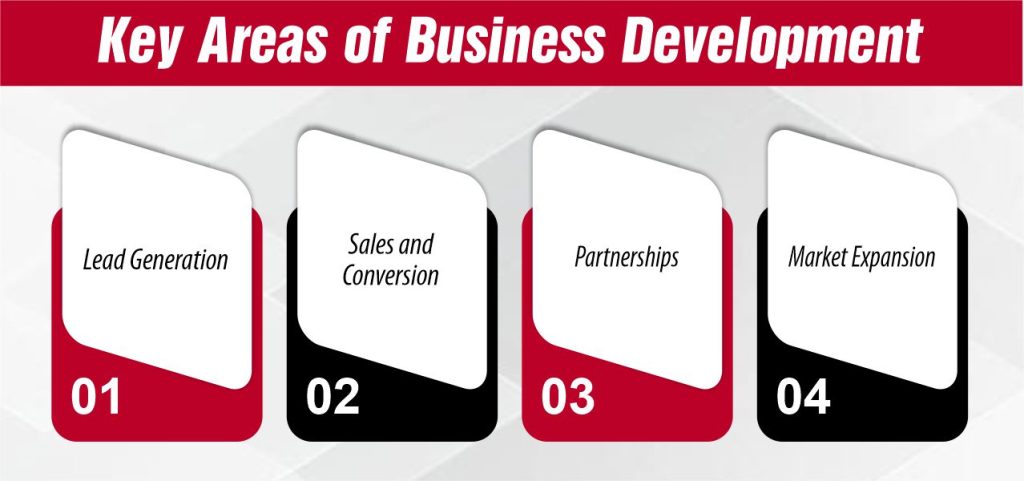
Key Areas of Business Development
Business development covers several important areas that help a business grow and succeed. Understanding these areas makes it easier to plan and take action. A strong business development strategy focuses on multiple parts of growth, not just one. This ensures steady progress and long-term results.
Lead Generation
A key part of business development is lead generation. This means finding potential customers who are most likely to be interested in your products or services. A clear business development process helps identify the right audience and create opportunities to connect with them. Lead generation is not just about collecting contacts; it’s about targeting people who can truly benefit from your offerings. Consistent lead generation keeps a business active and growing. It also builds a strong foundation for sales and long-term customer relationships.
Sales and Conversion
Sales and conversion are closely linked to business development responsibilities. After identifying leads, the next step is to guide them toward becoming paying customers. A well-planned business development strategy organizes this process efficiently. It ensures that every lead receives the right attention and approach, increasing the chance of conversion. By focusing on effective sales techniques and clear communication, businesses can steadily increase revenue. Strong sales and conversion efforts also strengthen trust with customers and improve overall business performance.
Partnerships
Building partnerships is another essential part of development and business. Partnerships allow companies to collaborate and create opportunities for mutual growth. Strong partnerships can expand market reach, share resources, and increase visibility. They also open doors to new projects, ideas, and innovations. In business development, maintaining healthy relationships with partners is as important as acquiring customers. This area helps a business build credibility, improve services, and achieve long-term stability.
Market Expansion
Market expansion focuses on reaching new areas, audiences, or segments. It helps a business grow beyond its current boundaries and reduces reliance on a small group of customers. Effective business development services often include market research, identifying untapped opportunities, and planning strategies to enter new markets. Expanding carefully ensures steady growth and minimizes risks. Market expansion is a key part of business management and development, as it strengthens the company’s presence, increases revenue, and creates a platform for long-term success.
Skills Needed for Business Development
To succeed in business development, a few key skills are essential. These skills help professionals identify opportunities, connect with the right people, and grow the business effectively. Understanding and developing these abilities makes the business development role easier and more productive.
Communication Skills
Strong communication is at the heart of business development responsibilities. It is not just about talking, but also about listening carefully and understanding client needs. Professionals with excellent communication skills can clearly explain solutions, answer questions, and handle objections confidently. This skill is essential for building trust with customers, partners, and even internal teams. Effective communication ensures that every interaction moves the business forward, strengthens relationships, and helps achieve growth goals. In business development, being able to convey value in simple and clear terms can make the difference between a lost opportunity and a successful deal.
Negotiation Skills
Negotiation is a critical skill in development and business. It is about finding solutions that benefit both the company and its clients or partners. Strong negotiators know how to discuss terms, handle objections, and create agreements that feel fair to all parties. This skill helps in securing better deals, improving contracts, and forming strong partnerships. In the business development process, negotiation is not just about pricing—it is about building trust, ensuring long-term cooperation, and turning opportunities into real growth. Professionals who master negotiation can expand the business efficiently while maintaining healthy relationships with stakeholders.
Problem-Solving
Problem-solving is a vital part of the business development process. Every business faces challenges, such as changes in the market, client concerns, or internal obstacles. Professionals with strong problem-solving skills can identify the root cause, find practical solutions, and adapt strategies quickly. This skill ensures that setbacks do not stop growth and that opportunities are not missed. In business development, problem-solving also helps improve processes, optimize strategies, and make decisions that drive consistent results. Being proactive in solving problems builds confidence with clients and partners, which is essential for long-term success.
Basic Marketing Knowledge
Basic marketing knowledge supports many business development services. Understanding marketing helps professionals attract new customers, communicate value, and support sales efforts effectively. It includes knowing how to create content, use social media, and implement simple campaigns that bring attention to the business. In business development, marketing knowledge also helps professionals understand customer behavior, improve engagement, and design strategies that align with growth goals. This combination of marketing and business skills makes growth more predictable, helps generate leads, and strengthens overall business performance.
Business Development vs Sales
Many people confuse business development with sales, but they are different roles that work together to grow a business. Understanding the distinction is important for building a strong business development strategy and improving overall performance.
Business Development
Business development focuses on creating new opportunities for growth. It involves finding potential clients, building partnerships, exploring new markets, and planning long-term strategies. The main goal is to expand the business and increase revenue over time. In simple terms, business development responsibilities include research, relationship-building, and strategy planning rather than directly closing deals.
Sales
Sales focuses on converting leads into paying customers. It is the process of turning opportunities created by business development into actual revenue. A strong sales team works with potential clients, addresses their needs, and completes transactions. While sales is short-term and result-oriented, it relies heavily on the groundwork laid by business development services.
Key Difference
The main difference between business development and sales lies in their focus and approach. Business development is about creating opportunities and building the foundation for growth. It involves identifying potential markets, connecting with new clients, forming partnerships, and developing long-term strategies that can expand the business. On the other hand, sales is about taking those opportunities and turning them into revenue. Sales teams focus on convincing leads to purchase, closing deals, and generating immediate income for the company.
Both areas are essential for a business to succeed. Without business development, sales teams may struggle to find the right leads or run out of opportunities. Without sales, business development efforts remain only plans and strategies without tangible results. By understanding this distinction, companies can align their teams effectively. A strong business development strategy sets the path for growth, while a skilled sales team executes the plan to generate consistent revenue. This balance ensures that business efforts are not wasted and that growth is both sustainable and measurable.
Conclusion
Business development is a vital part of any business that wants to grow, reach new customers, and increase revenue. It is much more than just closing sales—it involves creating new opportunities, building strong relationships, and planning for long-term success. A well-planned business development process ensures that every action a business takes supports growth, improves efficiency, and opens doors to new markets. By focusing on key areas such as lead generation, sales conversion, partnerships, and market expansion, businesses can create a steady path toward success.
Developing the right skills, including communication, negotiation, problem-solving, and basic marketing knowledge, strengthens the business development role and allows professionals to handle challenges effectively. Understanding the difference between business development and sales also helps businesses align their teams and strategies, making sure efforts lead to measurable results.
If you are ready to take your business to the next level, our expert team at Phoenix Dial can guide you through every step. We help you design a customized business development strategy, streamline your business development process, and implement effective methods to grow your revenue and customer base. Explore our professional business development services today by visiting Phoenix Dial and start building stronger connections and sustainable growth for your business.
FAQ’s
What is business development in simple words?
Business development means finding ways to grow a business, get new customers, and increase revenue over time. It focuses on creating opportunities and building long-term success.
Is business development the same as marketing?
No, marketing attracts people and promotes products, while business development creates opportunities and builds relationships to grow the business.
Can small businesses do business development?
Yes, small businesses can use simple strategies to find clients, form partnerships, and increase sales. Every small step can lead to growth.
What are the main goals of business development?
The main goals are to grow the business, gain more customers, increase revenue, and build strong partnerships for long-term success.