
Did you know that millions of businesses use Instagram Ads vs Facebook Ads every day to reach new customers? These platforms help brands grow fast, but choosing the right one is not always easy. Many business owners feel confused when they try to decide where to spend their money. Some focus only on one platform without understanding their audience. Others run ads without a clear plan and end up wasting their budget. This leads to low clicks, poor engagement, and no real sales.
The problem is simple. People do not fully understand the difference between Instagram and Facebook ads. Each platform works in a different way. Each one has a different audience and content style. If you choose the wrong one, your ads may not perform well. This can hurt your business growth and waste your time and money.
At Phoenix Dial, we solve this problem with smart and simple strategies. Our expert team studies your business, your audience, and your goals. Then we create ads that match the right platform. We focus on getting real results like leads, clicks, and sales. We do not guess. We use tested methods that work for service-based businesses.
In this post, you will learn the key differences between Instagram Ads vs Facebook Ads in a simple way. You will understand which platform suits your business and how to use it the right way. By the end, you will feel more confident and ready to run ads that bring real growth.
What Are Facebook Ads?
Facebook Ads are paid promotions that businesses use to show their products or services to people on Facebook. You pay money so your message reaches the right audience instead of waiting for organic reach. These ads help you get more clicks, leads, and sales in a faster way.
Facebook ads can appear in different places inside the platform. You can see them in the news feed while scrolling, in stories, in videos, and even in the marketplace section. This gives businesses many ways to reach people where they already spend time.
Facebook ads are a good choice for businesses that want to reach a wide audience. They work well for service-based businesses, local companies, and brands that want to build awareness or get leads. If you want to target people based on their interests, location, or behavior, Facebook ads can help you reach the right users easily.
What Are Instagram Ads?
Instagram Ads are paid promotions that businesses use to show their products or services to people on Instagram. You pay to reach a larger audience instead of relying only on organic posts. These ads help increase visibility, engagement, and sales in a faster way.
Instagram ads appear in different areas of the app. You can see them in the feed while scrolling, in stories between posts, in reels, and in the explore section. These placements help businesses connect with users as they view visual content.
Instagram ads are best for businesses that want to share strong visual content and attract an active audience. They work well for brands that focus on images, videos, and creative content. If your goal is to engage users and build a strong online presence, Instagram ads can be a great choice.
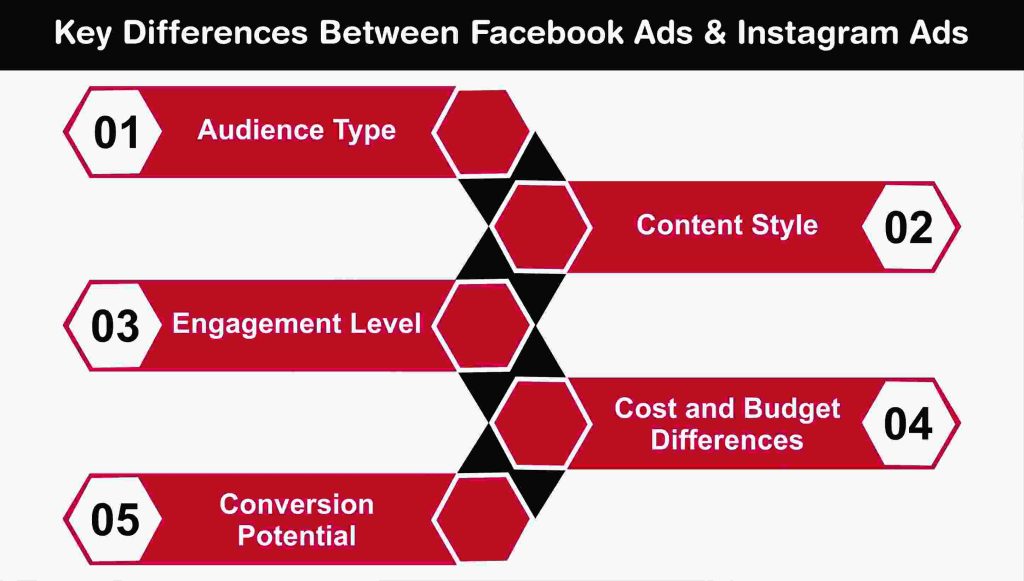
Key Differences Between Facebook Ads and Instagram Ads
Understanding the difference between Facebook and Instagram ads is very important. Both platforms are powerful, but they work in different ways. If you know these differences, you can choose the right platform and get better results.
Audience Type
Facebook has a very wide audience, making it suitable for businesses of all sizes. People of all ages use Facebook daily—from teenagers to adults and even older users. This means your ads can reach multiple age groups at once. It is also useful for businesses that target local areas, because you can narrow your audience by city, region, or even specific neighborhoods. Additionally, Facebook’s detailed targeting allows you to focus on users based on interests, behaviors, and life events.
Instagram, on the other hand, has a younger and more active audience. Most users are teenagers and young adults who enjoy visual content, trends, and fast-scrolling feeds. Instagram users often spend time exploring posts, stories, reels, and the explore page, making it ideal for brands that want to capture attention quickly. If your target audience is young, trendy, and highly engaged online, Instagram can deliver better results. Choosing the right platform based on audience type ensures your ad budget is spent wisely and your campaigns perform effectively.
Content Style
Facebook ads allow a mix of content types, including text, images, videos, carousels, and links. This flexibility makes it easier for businesses to explain their product or service in detail. For example, you can combine a video demo with a written description and a call-to-action button. Businesses that need to educate their audience or provide more information often find Facebook ads more suitable.
Instagram ads are highly visual and focus on eye-catching images, short videos, and creative designs. Since users scroll quickly through feeds, your content must be visually appealing to grab attention immediately. The platform works best for content that tells a story visually or inspires emotions. If your content is not engaging or visually strong, users may scroll past without noticing it. Therefore, creating attractive visuals is essential for Instagram ad success.
Engagement Level
Facebook users do engage with ads, but the level of interaction is usually moderate. People may like, comment, or share posts, but they are also scrolling through many updates and posts, which can reduce attention on your ad. Engagement on Facebook depends largely on how relevant or interesting your content is to your target audience.
Instagram, however, generally has higher engagement rates. Users actively interact with posts, stories, and reels by liking, commenting, sharing, and saving content. This makes Instagram a strong platform for building brand recognition and community engagement. If your main goal is to increase interaction and create a loyal audience, Instagram ads often perform better because users expect to engage with content in a more visual and interactive way.
Cost and Budget Differences
Facebook ads often provide flexible pricing, making them suitable for businesses with smaller budgets. You can start with a minimal daily spend and still reach a large audience. The platform also offers various bidding options, which allows you to control how much you pay for clicks, impressions, or conversions. This makes Facebook a beginner-friendly option for advertisers who are testing campaigns for the first time.
Instagram ads can sometimes be more expensive, especially if you are targeting competitive or highly active audiences. The platform prioritizes visually appealing content, which may require investing in high-quality photos, videos, or design work. While the cost per click or engagement might be higher, strong visuals and compelling messaging can deliver better results and higher returns if executed correctly. Careful planning and creative content are key to making Instagram ads cost-effective.
Conversion Potential
Facebook ads are known for strong conversion potential. They work well for lead generation, website visits, app installs, and direct sales. With detailed targeting and retargeting options, businesses can reach users who are most likely to take action, making Facebook ideal for campaigns focused on measurable results.
Instagram ads are excellent for building brand awareness and engagement, but they can also drive conversions if done properly. Ads that combine striking visuals with clear messages and strong calls-to-action can guide users toward purchases, sign-ups, or other desired actions. When your content connects with Instagram’s visually-driven audience, you can achieve conversions similar to Facebook while also boosting your brand’s recognition and social presence.
Audience Targeting: Which Platform Is Better?
Choosing the right platform for audience targeting can make or break your ad campaign. Both Facebook and Instagram offer powerful targeting tools, but they work differently. Understanding how each platform targets users can help you reach the right people and get better results from your ads.
How Facebook Targeting Works
Facebook targeting is very detailed. You can choose people based on their age, gender, location, and language. You can also target users by interests, hobbies, and behaviors, such as shopping habits, travel, or online activity. Additionally, Facebook allows retargeting, which means you can show ads to people who already visited your website or engaged with your content.
Another strong feature is “lookalike audiences.” This lets you reach people who are similar to your current customers. For example, if you have a list of buyers, Facebook can find other users with similar interests and behaviors. This makes it easier to get new leads while staying highly relevant.
How Instagram Targeting Works
Instagram uses Facebook’s ad system for targeting, so you can access similar options like age, location, interests, and behaviors. However, Instagram users are younger and more visually-focused. This means targeting should consider the type of content your audience enjoys, such as photos, reels, or stories.
Instagram also allows targeting by engagement. You can show ads to people who have interacted with your posts, viewed your stories, or followed your account. This helps reach active users who are more likely to notice and respond to your ads. Content relevance and creativity play a big role in Instagram ad success.
Which Platform Gives Better Audience Reach
Facebook usually gives broader reach because it has a larger and more diverse user base. It is easier to target multiple age groups and locations at once, making it great for businesses that want volume. You can also reach users who are less active on Instagram but spend time on Facebook.
Instagram offers a smaller but highly active audience. Engagement is often higher, meaning your ads are more likely to be seen, liked, and shared. If your target is young, trendy, and visually-oriented users, Instagram can provide better results despite a smaller audience. In many cases, using both platforms together gives the best reach, combining volume from Facebook and engagement from Instagram.
Ad Formats and Creative Styles
Choosing the right ad format and creative style is key to running successful campaigns on Facebook and Instagram. Both platforms offer multiple options, but they are designed differently. Understanding which format works best for each platform helps you create ads that capture attention and drive results.
Facebook Ad Formats
Facebook supports a wide variety of ad formats. You can use single image ads, video ads, carousel ads (multiple images or videos in one ad), slideshow ads, and even collection ads that combine images and shopping options. This flexibility allows you to explain your products or services in more detail and provide clickable links to your website or landing page.
These formats make Facebook ideal for campaigns that require more information. For example, a business can combine text, visuals, and a call-to-action button to guide users step by step. Facebook also supports interactive elements like polls or lead forms, which can increase engagement and lead generation.
Instagram Ad Formats
Instagram focuses on visually engaging formats. The main ad types are photo ads, video ads, carousel ads, reels ads, and story ads. Instagram users scroll quickly, so your content must grab attention immediately. Short, eye-catching videos or high-quality images work best.
Because Instagram is a visual platform, ads that tell a story or inspire emotions perform better. The platform also supports interactive features like stickers, polls, and swipe-up links in stories. This makes Instagram ideal for brands that rely on creativity and visual appeal to connect with their audience.
Which Platform Needs More Creative Content
Instagram generally requires more creative content than Facebook. Since users are highly visual and scroll quickly, your ads must stand out immediately. High-quality images, short videos, and engaging reels are essential to get attention and interaction.
Facebook allows a mix of content types, including more text and detailed descriptions, so it can be slightly easier to run ads without extremely polished visuals. However, engaging visuals still improve results on both platforms. In summary, if your business relies heavily on eye-catching images or videos, Instagram demands higher creativity, while Facebook allows more flexibility in content style.
Cost Comparison: Which One Is Cheaper?
Understanding costs is very important when planning ad campaigns. Both Facebook and Instagram ads can be effective, but they differ in pricing. Knowing how much each platform costs and how to manage your budget helps you spend wisely and get better results.
Cost Per Click (CPC) Basics
Cost per click (CPC) is the amount you pay each time someone clicks your ad. On Facebook, the CPC can vary depending on your audience, competition, and campaign type. In general, Facebook tends to have slightly lower CPCs because of its large user base and wide targeting options.
Instagram ads can have higher CPCs, especially for competitive audiences or trending niches. Since Instagram focuses on visuals and younger, active users, businesses may need to pay more to reach people who engage frequently. Despite this, the cost can be worth it if your ad captures attention and leads to sales.
Budget Flexibility
Facebook allows flexible budgeting. You can start with a small daily budget and adjust it as you see results. This makes it beginner-friendly and ideal for small businesses or those testing ads for the first time. You can control spending by setting daily or lifetime budgets and adjusting bids for clicks, impressions, or conversions.
Instagram also offers flexible budgeting, but because of the visual nature of the platform, businesses often need to invest more in creating high-quality images or videos. While the platform itself allows small budgets, the total cost may be higher due to content creation. Careful planning and testing are important to make Instagram ads cost-effective.
Simple Tips to Get Better Results
Running ads on Facebook or Instagram can be simple if you follow the right steps. Even small changes in how you manage your campaigns can make a big difference. Here are some practical tips to improve your results and get more value from your ad budget.
Start with a Small Budget
It’s better to begin with a small budget when launching your ads. This allows you to test your campaigns without spending too much money upfront. Starting small helps you understand which ads work and which do not. You can gradually increase your budget once you find a strategy that brings clicks, leads, or sales.
Test Different Ads
Testing multiple ad variations is very important. Try different images, videos, headlines, and calls-to-action. You may notice that some ads perform better than others. Testing helps you identify what your audience likes and responds to. Avoid relying on just one ad, as it may not reach its full potential.
Track Performance
Tracking your ad performance is key to improving results. Check metrics like clicks, impressions, engagement, and conversions regularly. These numbers show which ads are working and which ones need adjustments. Facebook and Instagram both provide analytics tools that make it easy to monitor your campaigns.
Improve Based on Results
Use the data from tracking to make changes and improve your ads. If one ad gets better engagement, create similar versions. If another ad performs poorly, tweak the image, text, or target audience. Continuous improvement ensures your campaigns get better over time and delivers more leads, sales, and brand visibility.
Conclusion
Choosing between Instagram Ads vs Facebook Ads depends on your business goals, audience, and content style. Facebook is great for reaching a wide range of people and driving conversions, while Instagram works best for visually appealing content and higher engagement with younger users. Both platforms have their strengths, and using them together can help you maximize reach, engagement, and results.
By understanding the differences, testing your ads, and tracking performance, you can make smarter decisions and get better results from your ad campaigns. Start small, focus on creativity, and adjust based on what works best for your audience.
For expert guidance and tailored ad strategies that help your business grow, visit Phoenix Dial and let our team of specialists handle your Facebook and Instagram campaigns with proven results.
FAQ’s
What is the main difference between Facebook and Instagram ads?
Facebook ads reach a broader and more diverse audience, while Instagram ads focus on younger, visually-driven users. The content style and engagement patterns also differ between the platforms.
Which is better for beginners?
Facebook is usually better for beginners because it offers flexible budgets, detailed targeting, and multiple ad formats. It is easier to start small and test campaigns.
Are Instagram ads more expensive?
Instagram ads can be slightly more expensive due to high engagement and visual content requirements. Costs rise especially for competitive audiences or trendy niches.
Can I run ads on both platforms together?
Yes, you can run ads on both Facebook and Instagram simultaneously using the same campaign. This helps you reach a wider audience and combine engagement with reach.
Which platform gives faster results?
Facebook often delivers faster measurable results for clicks, leads, and sales. Instagram can generate strong engagement quickly but may take longer for conversions depending on content quality.