

Did you know most customers interact with a brand at least five to seven times before they make a buying decision? Today, people see your ad on social media, visit your website, read reviews, and check their email before they trust you. Yet many businesses still send mixed messages across these platforms. This creates confusion and weak trust. Customers start to doubt the brand because nothing feels connected. That is why integrated marketing communications matter more than ever.
Many service-based businesses struggle because their ads, emails, and social media posts do not share the same message. One platform talks about discounts. Another talks about quality. The website says something different. This lack of alignment reduces results and wastes marketing budget. Without integrated marketing communications, your efforts stay scattered and ineffective.
At Phoenix Dial, we solve this problem with a clear and focused approach. Our expert team builds one strong brand message and applies it across every channel. We align your website, ads, content, and email marketing so everything works together. This creates trust and improves conversions. In this post, you will learn how integrated marketing communications work, why they are important, and how you can use them to grow your business in a simple and smart way.
What Is Integrated Marketing Communications?
Integrated marketing communications is a simple but powerful idea. It means a business shares one clear message across all its marketing channels. Many people ask, what is imc in simple words? The answer is easy. It is when all your marketing works together instead of working separately.
To define integrated marketing communications imc, we can say it is a method where every platform supports the same goal and message. Your website, ads, email, and social media should not say different things. They should sound connected and consistent. This is the true integrated market communication meaning. All marketing channels speak the same message.
Many businesses struggle because their communication feels disconnected. One channel talks about low prices. Another talks about premium service. This confuses customers. When people feel confused, they do not trust the brand. Without strong integrated marketing communications, marketing efforts become weak and unclear.
Clear and consistent messaging builds trust. It makes your brand look professional. It helps customers understand who you are and what you offer. When your message stays the same everywhere, people remember you faster. This is why integrated marketing is important for service-based businesses that want steady growth.
Why IMC Matters Today
Today, customers do not use just one platform. They move from social media to websites, from emails to online ads. They search on Google. They scroll on Instagram. They read reviews before they decide. This is why integrated marketing communications are more important than ever.
Many people still ask, what is imc and why does it matter now? The answer is simple. Customers see your brand in many places. If your message changes on every platform, they feel confused. Confused customers do not take action. Clear communication helps them trust your brand.
The real integrated market communication meaning is about unity. It means your brand speaks with one voice everywhere. When your message stays the same across all channels, people understand you better. They remember your offer. They feel confident about choosing you.
Without a clear imc strategy, businesses send mixed signals. One platform may focus on price. Another may focus on quality. This weakens your impact. Strong imc marketing keeps everything aligned. It connects all channels under one clear goal.
Today’s market is crowded and competitive. Customers have many choices. If your brand message is not consistent, you lose attention quickly. Integrated marketing communications helps businesses stay clear, strong, and easy to understand in a fast-moving digital world.
Benefits of IMC
Integrated marketing communications helps businesses create clarity in their marketing. When all channels share the same message, your brand becomes stronger and more trusted. Many business owners ask about the real imc meaning and why it is important. The answer is simple. It connects all marketing efforts into one clear direction.
A strong imc marketing strategy makes sure every platform works together. This improves results and reduces confusion. Let’s understand the key benefits of using integrated marketing communications.
Strong Brand Message
A clear message builds trust. When your website, ads, and social media share the same tone and promise, customers understand you better. This is the true integrated market communication meaning. It keeps your brand voice consistent.
Without a clear message, people feel unsure. With a proper imc strategy, your brand speaks in one voice. This makes your business look professional and reliable.
Better Customer Experience
Customers want simple and clear communication. They do not want mixed information. Integrated marketing communications ensures that customers receive the same message everywhere.
When all channels are aligned, customers feel confident. They understand your service faster. This improves their overall experience with your brand.
Higher Marketing ROI
Marketing costs money. When channels work separately, money gets wasted. A strong imc marketing plan connects all efforts under one goal.
This increases efficiency. Your campaigns support each other. This improves conversions and brings better return on investment. Smart imc integrated marketing reduces waste and improves performance.
Improved Brand Recognition
People remember brands that stay consistent. When your message stays the same across platforms, your brand becomes easy to recognize.
Strong integrated marketing increases brand recall. Customers remember your name, your promise, and your value. Over time, this builds long-term trust and loyalty.
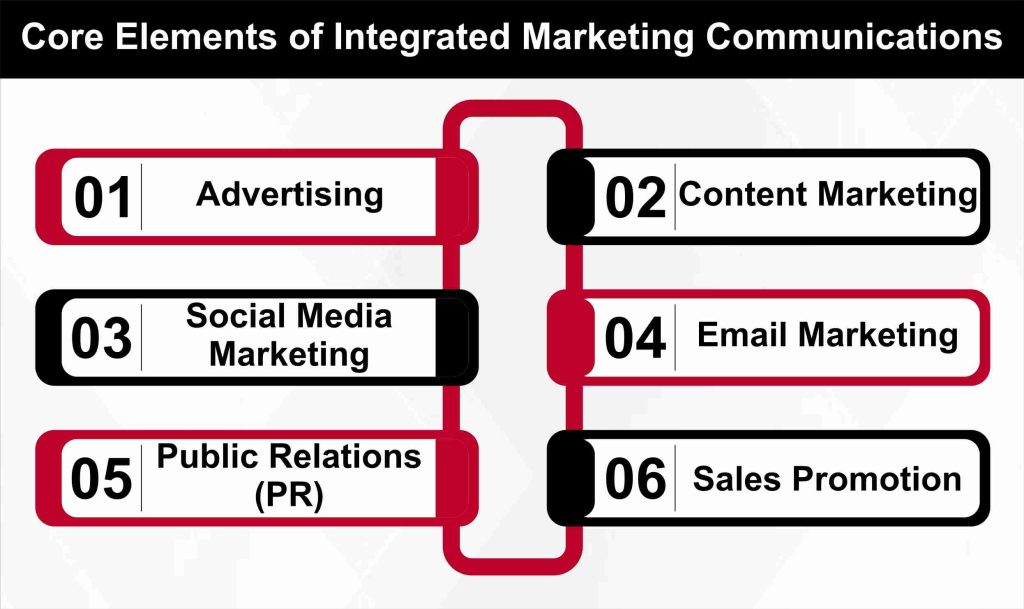
Core Elements of Integrated Marketing Communications
Integrated marketing communications works best when all marketing tools are connected under one clear message. Each element supports the others, creating a strong, unified brand presence. A smart imc strategy ensures every channel communicates consistently and reinforces the same idea. Let’s take a closer look at the main elements of integrated marketing communications.
Advertising
Advertising is the most visible and direct way to reach your audience. It includes paid ads on Google, social media, display networks, or other platforms. The main goal is to grab attention and create awareness about your product or service. With a well-planned imc marketing plan, your ads echo the same message as your other channels, like content marketing, emails, and social media. This consistency ensures that every time someone sees your ad, they understand your brand clearly. Consistent advertising builds recognition, trust, and stronger customer connections over time.
Content Marketing
Content marketing involves creating helpful blogs, articles, videos, infographics, or guides to educate your audience. It is a powerful way to build trust and authority in your industry. Following your imc integrated marketing strategy, your content reflects the same tone and message as your other marketing efforts. Whether it’s an informative blog post or an engaging video, the content strengthens your brand voice. By keeping your content consistent with other channels, you ensure that customers recognize your brand and message wherever they interact with it.
Social Media Marketing
Social media marketing engages customers on platforms like Facebook, Instagram, LinkedIn, and Twitter. It is one of the fastest ways to reach your audience and start conversations. A strong imc marketing strategy ensures your brand voice stays consistent across all social platforms. Posts, captions, and campaigns all align with your overall message. Consistent social media communication helps build credibility, reinforces your brand identity, and makes it easier for customers to trust and remember your business.
Email Marketing
Email marketing allows you to send direct, personalized messages to your audience. This can include newsletters, promotions, updates, or announcements. Through integrated marketing communications, your emails reflect the same tone and content as your social posts, ads, and website. This creates a smooth and unified experience for customers. When every email reinforces your brand promise, it helps customers feel familiar with your brand and encourages them to engage or take action.
Public Relations (PR)
Public relations (PR) focuses on managing how your brand is perceived by the public. This includes press releases, media coverage, interviews, and other communications. A strong imc plan makes sure your PR efforts tell the same story as your other marketing channels. By aligning PR with your overall message, your brand gains credibility and trust. Consistency between PR and other marketing efforts ensures that your audience sees a clear, professional, and unified image of your business.
Sales Promotion
Sales promotions include discounts, special offers, limited-time deals, or bundled packages. When integrated with an imc marketing plan, promotions support the overall brand message rather than just focusing on price. Customers see a consistent value proposition across all channels, from emails to social media posts to advertisements. This alignment encourages faster decision-making and higher engagement while keeping your brand message strong and consistent.
Effective IMC Strategy
An effective IMC strategy ensures that all marketing channels work together to deliver one clear message. Many businesses struggle because their campaigns feel disconnected, even if they invest heavily in ads, social media, and emails. A well-planned imc marketing strategy brings every marketing effort under one unified approach. This not only strengthens your brand but also improves engagement and results. Let’s break down the key steps for creating an effective integrated marketing communications strategy.
Set Clear Goals
The first step in any imc plan is to define clear goals. Do you want to increase brand awareness, generate leads, or boost sales? Your goals will guide every marketing activity. A strong imc marketing plan ensures that each campaign, whether it’s advertising, content, or email, supports the same objectives. Clear goals prevent wasted efforts and make it easier to measure success.
Know Your Audience
Understanding your audience is critical. Who are they? What problems do they face? What motivates them to take action? An imc strategy works best when it targets the right people with the right message. By knowing your audience, you can create campaigns that resonate across all channels, from social media to email, and provide a seamless experience.
Create a Consistent Message
Consistency is the heart of integrated marketing communications. All channels—ads, content, social media, and emails—should carry the same message, tone, and brand voice. When customers see the same story everywhere, they understand your value and remember your brand. A strong imc marketing strategy ensures that no channel contradicts another and every touchpoint reinforces your promise.
Choose the Right Channels
Not all marketing channels are equal for every business. Choosing the right channels depends on where your audience spends time. Whether it’s social media, paid ads, email, or PR, focus on the platforms that deliver the most impact. A well-executed imc marketing plan connects the right channels to reach your audience effectively while keeping the message unified.
Align Your Team
For an imc integrated marketing approach to succeed, your team must work together. Marketing, sales, and content teams should communicate regularly and share a clear vision. Aligning your team ensures that campaigns stay consistent, deadlines are met, and every channel reinforces the same message. Team alignment reduces mistakes and strengthens your brand presence.
Measure and Improve
No strategy is complete without tracking results. Monitor your campaigns to see what works and what doesn’t. Metrics such as engagement, leads, conversions, and ROI help you adjust your imc marketing strategy. Continuous improvement ensures your marketing stays effective, and all channels continue to work together to reach your business goals.
Conclusion
Integrated marketing communications is no longer optional for businesses that want to grow. When all marketing channels share one clear message, brands build trust, improve engagement, and deliver better results. A strong imc marketing strategy ensures your ads, content, emails, social media, and PR work together, creating a unified experience for your audience.
By setting clear goals, knowing your audience, creating a consistent message, choosing the right channels, aligning your team, and measuring results, you can turn scattered marketing efforts into a powerful system that drives growth.
At Phoenix Dial, our team of experts specializes in integrated marketing communications. We help service-based businesses develop effective imc plans that align all channels, strengthen brand messaging, and maximize ROI. Visit our website today to learn how we can create a smart imc strategy tailored to your business and start improving your marketing results.
FAQ’s
What is integrated marketing communications in simple words?
Integrated marketing communications, or IMC, is when all your marketing channels—ads, social media, emails, website—share the same message. It makes your brand clear, consistent, and easy for customers to understand.
Is IMC only for big companies?
No. IMC works for businesses of any size. Small businesses can also benefit by aligning their messaging across platforms to build trust and save marketing costs.
How long does IMC take to show results?
Results from integrated marketing communications vary. Some improvements, like clearer messaging, can happen quickly. Stronger brand recognition and higher sales may take a few months as customers start noticing your consistent message.
Can small businesses use IMC?
Yes. Small businesses can use IMC effectively. Even with limited budgets, aligning your message across a few channels—like social media, email, and ads—can improve customer trust and growth.
What is the difference between marketing and integrated marketing?
Marketing is any activity to promote your product or service. Integrated marketing communications (IMC) is a strategy that makes all those activities work together with one consistent message. IMC ensures your brand speaks in a unified voice across all channels.