

Email still gives one of the highest returns in digital marketing today, even when trends change fast. Many businesses use email every day, but most still struggle because they do not follow a clear email marketing strategy. They send random messages, use weak subject lines, or email too often. This confuses readers and reduces trust. As a result, open rates drop, clicks fall, and sales slow down.
At Phoenix Dial, our expert team focuses on audience needs, message timing, and clear goals to fix these problems. We help brands plan emails that feel helpful, not pushy. In this post, you will learn how a smart email marketing strategy works and how you can use it step by step to build trust, improve engagement, and drive steady sales.
What Is an Email Marketing Strategy?
Email marketing means sending messages to people through email. Businesses use it to share updates, offers, tips, or news. These emails help brands stay in touch with their audience. Email is direct and easy to use. People check their inbox every day, which makes email a strong communication channel.
An email marketing strategy is a clear plan for sending the right emails to the right people. It helps decide what to send, when to send it, and why it matters. This plan keeps emails focused and useful. It also helps avoid random messages that confuse readers.
Businesses still use email today because it builds trust and long-term relationships. Email allows personal communication at a low cost. It also helps brands control their message without depending on social media platforms. A well-planned email marketing strategy supports steady growth and better engagement over time.
Does Email Marketing Work?
Yes, email marketing works and continues to be one of the most effective ways for businesses to reach their customers. People still read emails because they check their inbox every day and often look for updates, special offers, or useful information. Emails appear directly in a person’s inbox, so they are more likely to be seen than posts on social media, which can easily get lost in endless feeds.
Email helps build trust because it allows businesses to communicate consistently and personally with their audience. When readers receive relevant and helpful messages, they start to recognize the brand and feel confident in it. Over time, this regular communication strengthens relationships and encourages engagement. Compared to social media, email gives businesses more control over the message, timing, and audience. Social platforms may change algorithms or rules, which can affect visibility, but email ensures that the message reaches the intended people directly, making it a reliable tool for long-term growth.
Why You Need an Email Marketing Strategy
Planning matters because sending emails without a clear plan can be confusing and ineffective. A well-thought-out email marketing strategy ensures that every message has a purpose and reaches the right audience at the right time.
Having a strategy saves time because it helps organize content, schedules, and goals in advance. Instead of deciding what to send each day, businesses can follow a clear plan that keeps everything on track.
A good strategy also improves results. By targeting the right people with the right message, emails are more likely to be opened, read, and acted on. This increases engagement and helps achieve business goals more efficiently.
Finally, an email marketing strategy helps track success. By setting clear objectives, businesses can measure opens, clicks, and responses. This makes it easier to understand what works, adjust future emails, and continually improve performance.
Email Marketing Strategies
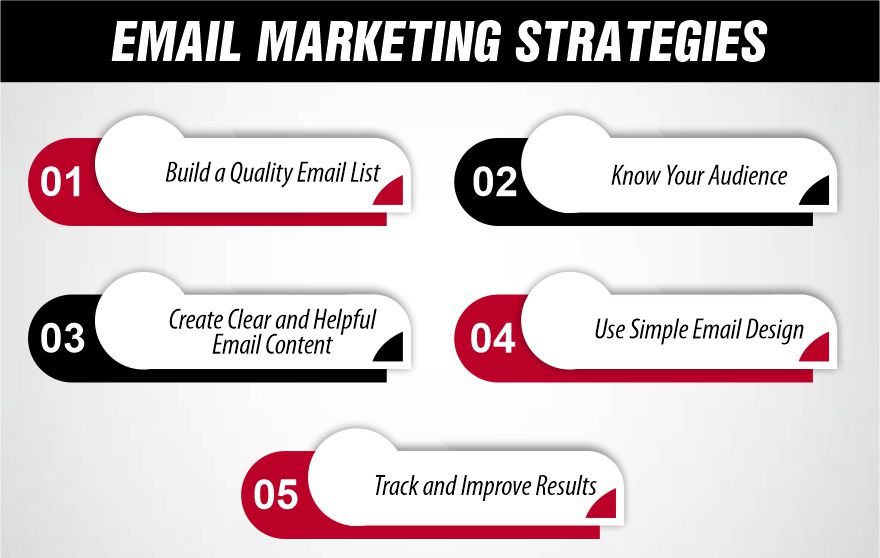
An email marketing strategy is not just about sending emails. It’s about planning each step to reach the right people with the right message. The goal is to connect with readers, provide value, and encourage action. Successful strategies focus on planning, content, design, and measurement to get the best results.
Build a Quality Email List
A strong email marketing strategy starts with a high-quality email list. It’s better to have a smaller list of people who are genuinely interested than a large list of random addresses. Sending emails to people who want to hear from youimproves engagement, increases open and click rates, and reduces the chance of unsubscribes. Focusing on quality over quantity also helps your overall email reputation and deliverability.
Know Your Audience
Understanding your audience is key to sending emails that actually get noticed. Knowing their interests, needs, and challenges allows you to send messages that feel relevant and personal. When emails match what your readers care about, they are more likely to read them, engage with the content, and take the actions you want. This understanding also helps in creating segments for more targeted campaigns.
Create Clear and Helpful Email Content
Emails should be simple, focused, and provide value. Each message should have one clear purpose and use easy-to-understand language. Avoid clutter and long paragraphs. Helpful and informative emails build trust with your readers, keep them engaged, and make them more likely to take action, whether it’s clicking a link, reading an article, or making a purchase.
Use Simple Email Design
A clean and simple design improves readability and ensures your message gets through. Emails should be easy to read on all devices, especially on mobile phones. Using clear headings, short paragraphs, and a simple layout makes it easier for readers to understand your message quickly. A visually clean email also keeps the focus on your content and call-to-action without distractions.
Track and Improve Results
Tracking results is a crucial part of an effective email marketing strategy. Monitoring metrics like opens, clicks, and conversions shows what works and what doesn’t. Analyzing this data allows you to refine your approach, adjust email content, test new ideas, and continuously improve future campaigns. Over time, tracking ensures that your emails become more effective and deliver better results for your business.
5 Email Marketing Tactics
To make an email marketing strategy effective, businesses need clear tactics. Tactics are specific types of emails that serve different purposes. Using a mix of emails helps build trust, provide value, and encourage action. The five main email marketing tactics focus on welcoming new subscribers, educating readers, promoting offers, following up, and re-engaging inactive users.
1. Welcome Emails
Welcome emails are the first messages new subscribers receive. They set the tone for your relationship and introduce your brand. A well-planned welcome email helps readers understand what to expect from your emails and makes them more likely to stay engaged.
2. Educational Emails
Educational emails focus on providing useful information, tips, or guidance. These emails help readers learn something valuable while showing your expertise. Sending helpful content builds trust and positions your business as a reliable source of information.
3. Promotional Emails
Promotional emails share offers, discounts, or special deals. The goal is to encourage readers to take action, such as making a purchase or signing up for a service. When done correctly, these emails feel helpful rather than pushy and complement other types of email content.
4. Follow-Up Emails
Follow-up emails are sent after a reader takes an action or interacts with your brand. They remind, thank, or guide readers toward the next step. This tactic improves conversions because it keeps your brand top-of-mind and encourages readers to complete a desired action.
5. Re-Engagement Emails
Re-engagement emails target subscribers who have become inactive. These emails aim to bring readers back by offering value, reminders, or incentives. Regularly re-engaging inactive users helps maintain a healthy and responsive email list, improving the overall effectiveness of your email marketing strategy.
Common Email Marketing Mistakes to Avoid
Even with a solid email marketing strategy, businesses can make mistakes that reduce effectiveness. Avoiding these common errors ensures your emails reach readers, get opened, and drive engagement. Focusing on quality, clarity, and tracking helps maintain a strong connection with your audience.
Sending Too Many Emails
Sending emails too frequently can overwhelm readers and lead to unsubscribes. Overloading inboxes reduces engagement and damages trust. A consistent but reasonable schedule keeps your audience interested without annoying them.
Using Unclear Subject Lines
The subject line is the first thing readers see. Unclear or vague subject lines make people ignore your emails. Clear, concise, and relevant subject lines help readers understand what the email is about and encourage them to open it.
Ignoring Mobile Users
Many people read emails on their phones. Ignoring mobile design can make emails hard to read or navigate. Emails should have a clean layout, readable text, and clickable buttons to ensure a smooth experience on all devices.
Not Checking Results
Failing to track metrics like opens, clicks, and conversions prevents improvement. Without monitoring results, businesses cannot know what works and what doesn’t. Regularly checking performance allows you to adjust content, timing, and tactics to make your email marketing strategy more effective.
Conclusion
A well-planned email marketing strategy can help businesses connect with their audience, build trust, and achieve meaningful results. When businesses focus on the right tactics, send valuable and relevant content, avoid common mistakes, and track performance regularly, emails become more than just messages—they turn into a powerful tool for growth. A thoughtful approach ensures higher open rates, better engagement, and stronger relationships with your subscribers, which ultimately supports long-term business success.
If you want expert guidance and a fully customized email marketing strategy plan, visit Phoenix Dial today. Our experienced team will help you design emails that reach the right audience, deliver value, and generate real results for your business. With the right strategy, every email can contribute to building trust, increasing engagement, and growing your brand.
FAQ’s
What are the strategies of email marketing?
Email marketing strategies are plans that help businesses reach the right audience with the right messages. They include building a quality email list, creating valuable content, sending targeted emails, using a clear design, and tracking results to improve performance.
What is the 3-3-3 rule in marketing?
The 3-3-3 rule means connecting with your audience three times, using three channels, over three days. It helps reinforce your message and increases the chances that people will notice and engage with your content.
What is the 60-40 rule in email?
The 60-40 rule in email marketing suggests that 60% of your emails should provide helpful or informative content, while 40% can focus on promotions or sales. This balance keeps readers engaged without overwhelming them with offers.
What are the 5 T’s of email marketing?
The 5 T’s of email marketing are: Target, Timing, Tone, Text, and Tracking. They guide how to reach the right audience, send messages at the right time, use a clear tone, write effective content, and measure results for continuous improvement.