

Over 70% of buyers search online before they talk to a business. This fact clearly shows why what is inbound marketing matters so much today. People want answers, not sales calls. They skip ads, ignore cold emails, and avoid pushy messages. This makes it hard for many businesses to get quality leads. Time and money often go to waste with no real results.
At Phoenix Dial, our expert team focuses on inbound methods that attract people who are already looking for help. We help businesses build trust by sharing useful content instead of forcing sales. In this post, you will learn what inbound marketing is, how it works step by step, and why it helps businesses grow in a smarter and more natural way.
Inbound Marketing Defined
Inbound marketing is a simple way to grow a business by attracting people instead of chasing them. The inbound marketing definition focuses on helping users with useful content. It answers real questions and solves real problems. This helps people find a business on their own when they search online. When someone asks what is inbound marketing, the short answer is that it brings customers by being helpful, clear, and honest.
Inbound Use Cases
Inbound marketing can work for many types of businesses. It is effective because it focuses on helping people first and attracting the right audience naturally. Different businesses can apply inbound in ways that fit their goals, resources, and audience behavior.
Small Businesses
Small businesses often have limited budgets and need long-term growth. Inbound marketing strategies help them attract local or niche audiences without spending heavily on ads. By creating helpful content, small businesses can build trust, generate leads, and grow steadily over time.
Service-Based Companies
Service-based companies, like agencies or consultants, benefit from inbound because it generates high-quality leads. Inbound marketing services such as blogs, case studies, and guides educate potential clients before they contact the business. This approach makes it easier to convert leads into paying customers.
Online Brands
Online brands, such as e-commerce stores or digital products, can use inbound to attract users who are actively searching for solutions. Effective inbound marketing provides value through tutorials, product guides, and informative content. This builds trust, encourages repeat visits, and increases sales without pushing aggressive ads.
Outbound Use Cases
While inbound marketing focuses on attracting users naturally, outbound marketing can still play an important role in certain situations. Outbound approaches reach a wide audience quickly, making them suitable for fast results or large campaigns.
New Product Launch
When a business launches a new product, outbound marketing helps get immediate attention. Paid ads, emails, and sponsored posts can reach many people quickly. This approach is useful for creating awareness before organic inbound methods start generating traffic.
Time-Sensitive Offers
Outbound marketing works well for limited-time deals, sales, or promotions. These campaigns create urgency and encourage quick action. By directly reaching the audience through ads or email campaigns, businesses can boost short-term conversions efficiently.
Large Brand Awareness
Large brands often use outbound methods to maintain visibility and reach broad audiences. Television ads, online banners, and social campaigns help reinforce the brand in people’s minds. This can complement inbound marketing vs outbound marketing strategies, combining awareness with trust-building content.
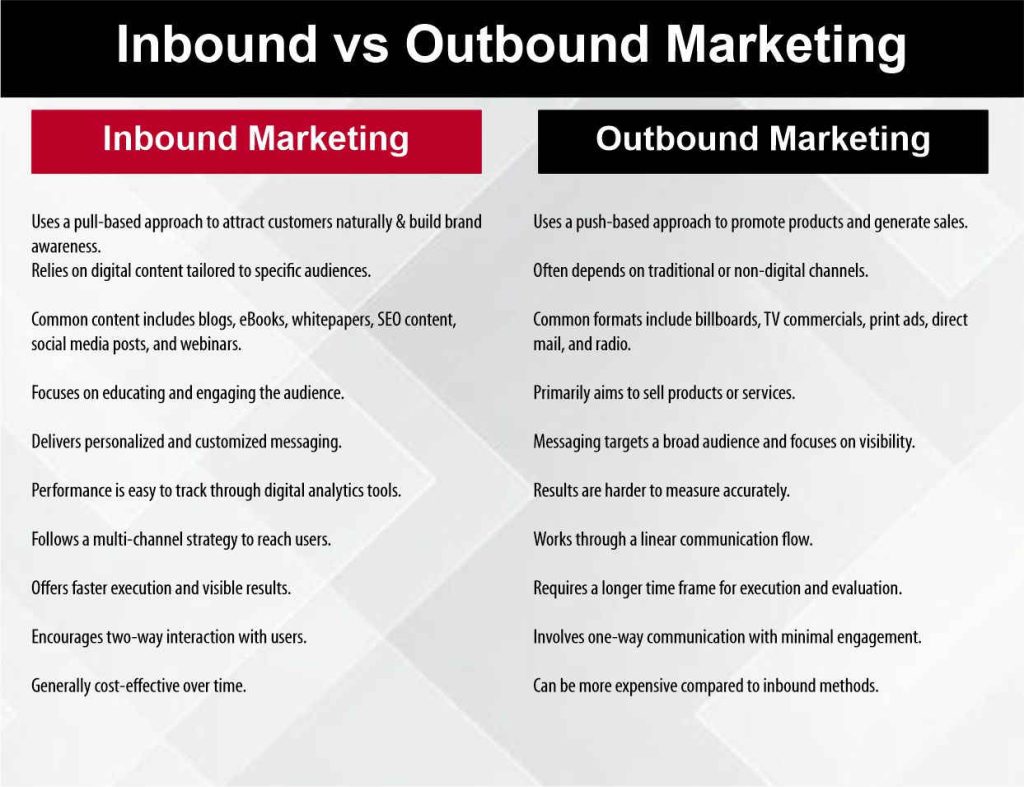
Inbound vs Outbound Marketing
Benefits of Inbound Marketing
Inbound marketing offers several advantages that help businesses grow naturally and sustainably. Unlike traditional outbound methods, inbound focuses on attracting users by providing value, which leads to long-term benefits for the brand.
Lower Cost Over Time
Inbound marketing strategies often require less money than paid advertising in the long run. Creating helpful content like blogs, videos, or guides may take time upfront, but it continues to attract users without ongoing ad spend. Over time, this approach reduces marketing costs while delivering consistent results.
Better Quality Leads
Inbound attracts people who are already searching for solutions. This means leads are more likely to be interested in your products or services. By focusing on the right audience, effective inbound marketing generates higher-quality leads that convert more easily than random or cold contacts.
Builds Trust and Authority
Providing valuable content and solving problems positions a business as an expert. Inbound marketing builds credibility and trust with the audience. When people see helpful content, they are more likely to view the brand as reliable, which strengthens long-term relationships and encourages loyalty.
Works 24/7
One of the biggest advantages of inbound marketing is that it never sleeps. Blogs, videos, and other content are always available online. This means potential customers can discover your business anytime. Inbound marketing services ensure your brand continues attracting and engaging users even outside regular business hours.
Inbound Marketing Fundamentals
Inbound marketing works on a few simple ideas. These ideas help people find your business, trust it, and take action. When these fundamentals work together, inbound marketing becomes clear and effective. They focus on helping users first and supporting business growth at the same time.
Content Creation
Content creation means sharing useful information that answers real questions. This content explains topics in simple words and solves common problems. Inbound marketing uses content to guide users, not to push sales. When content helps people learn, they stay longer and come back again.
Search Visibility
Search visibility means helping people find your content online. Users search for answers every day. Inbound marketing makes sure your content appears when users search for help. This brings the right people at the right time without interruption.
Trust and Value
Trust grows when users feel understood and supported. Inbound focuses on giving value before asking for anything. When people trust a brand, they listen more and feel confident. This trust is a key part of effective inbound marketing.
Business Goals
Inbound also supports clear business goals. It helps attract the right audience, generate leads, and support sales. Inbound marketing strategy aligns helpful content with what the business wants to achieve. This balance keeps growth steady and meaningful.
Inbound Marketing Funnel
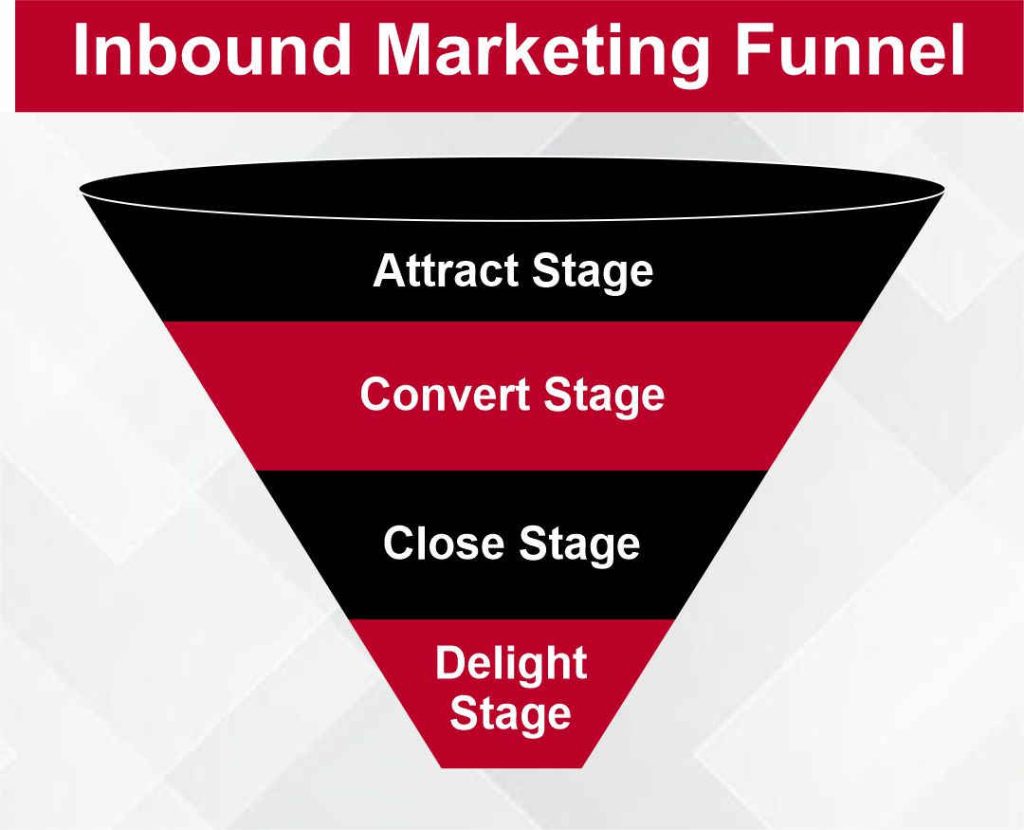
The inbound marketing funnel is a simple framework that shows how users move from discovering a business to becoming happy customers. It helps businesses guide people step by step without being pushy. The funnel focuses on helping, educating, and building trust at every stage.
Attract Stage
The attractive stage brings the right people to your business. This happens through blogs, social media posts, and helpful content that answers questions. Inbound marketing strategies focus on showing value first so users find you naturally when they search online. The goal is to draw people who are interested in your topic, not just anyone.
Convert Stage
The convert stage turns visitors into leads. This is done by offering something useful in exchange for contact details, like a free guide or newsletter signup. Inbound marketing uses forms, calls-to-action, and landing pages to make conversion simple and helpful. The focus is on giving value while collecting information to follow up later.
Close Stage
The close stage turns leads into customers. At this stage, the business provides personalized messages, emails, and offers that match the lead’s needs. Effective inbound marketing ensures that selling happens naturally because trust has already been built in earlier stages.
Delight Stage
The delight stage keeps customers happy and encourages repeat business. This includes follow-up content, tips, surveys, or helpful updates. Inbound marketing services aim to turn customers into promoters by continuing to provide value even after a purchase. This stage strengthens loyalty and encourages referrals, creating a cycle of long-term growth.
Inbound Strategy Creation
Creating an inbound marketing strategy is about planning how to attract, engage, and convert the right audience. A clear strategy makes inbound efforts effective and helps businesses grow naturally. It focuses on understanding users, delivering helpful content, and using the right channels to reach them.
Define Your Audience
Defining your audience means knowing who you want to help. This includes understanding their problems, needs, and interests. Inbound marketing strategies work best when content is tailored to real people, not a general crowd. By knowing your audience, you can create messages that resonate and attract the right visitors.
Choose the Right Content
Choosing the right content means picking formats that answer questions and provide value. This can include blogs, videos, guides, or infographics. Effective inbound marketing focuses on helpful content rather than pushing sales. The goal is to educate, inform, and support users so they naturally move toward your business.
Pick the Right Channels
Picking the right channels is about choosing where your audience spends time. This can include search engines, social media, email, or your website. Inbound marketing services use the channels that bring the most engagement and interest. Using the right platforms ensures your content reaches people who are already looking for help.
Conclusion
Inbound marketing is a powerful way to grow your business by attracting, engaging, and delighting the right audience. It focuses on helping users first, building trust, and providing consistent value. By using effective inbound marketing strategies, businesses can generate better leads, reduce costs, and strengthen their authority in the market.
If you want to take your business growth to the next level, our team at Phoenix Dial can help. We offer professional inbound marketing services tailored to your needs. Contact us today to get started and see how inbound marketing can transform your business.
FAQ’s
What is inbound marketing in simple terms?
Inbound marketing means attracting people by helping them, not chasing them. It uses useful content to answer questions and solve problems. People find your business when they search online.
Is inbound marketing better than outbound?
Inbound marketing vs outbound marketing depends on your goal. Inbound builds trust and long-term growth. Outbound brings faster attention but often costs more.
How long does inbound marketing take to work?
Inbound marketing takes time because it builds trust and visibility. Many businesses see early results in a few months. Strong results grow with consistency.
Can small businesses use inbound marketing?
Yes, inbound marketing works well for small businesses. It costs less over time and attracts better leads. It helps small teams compete with larger brands.