

More than half of businesses fail because they cannot find enough customers. This makes lead generation one of the most important parts of marketing today. Many business owners have a website and social pages, but they still do not get calls or messages. The main problem is that they attract visitors but fail to turn them into real leads.
At Phoenix Dial, we help service-based businesses solve this issue with clear planning and proven systems built by our expert team. We focus on attracting the right audience and guiding them to take action. In this post, you will learn how lead generation works, why it matters for business growth, and how you can use simple steps to get steady leads over time.
What Is Lead Generation?
Lead generation means finding people who are interested in your product or service. It is the process of turning visitors into contacts you can talk to later. These visitors may come from your website, ads, or social media pages. When someone shows interest and shares their details, the process of generating leads begins. This helps businesses connect with people who may become future customers.
A lead is a person who shows interest in your business. This interest can be small, like filling out a form or asking a question. Leads matter because not everyone is ready to buy right away. Generating leads allows you to stay in touch, build trust, and guide people step by step.
For example, a local service business may get a lead when someone requests a free quote. This simple action helps the business grow in a steady and planned way.
How Lead Generation Works
Lead generation follows a clear and simple process that helps businesses find and connect with potential customers. Each step is designed to turn strangers into interested contacts. When done correctly, this process saves time, increases results, and helps businesses stay organized. Consistent efforts in generating leads ensure a steady flow of potential clients for your business.
Attracting people to your business
The first step is to bring the right audience to your business. This can be done with helpful blog posts, social media content, ads, or even local events. For instance, a local service business might share practical tips or guides online to attract nearby customers.
By focusing on the audience that truly needs your services, you create a strong foundation for lead generation marketing. The more relevant your content, the higher the chances of attracting quality leads.
Collecting contact details
Once visitors reach your page, the next step is to give them a reason to stay and interact. You can offer free guides, consultations, or quotes in exchange for their details like name, email, or phone number.
This step is crucial because it turns casual visitors into real leads. With proper forms and incentives, businesses can improve how to generate leads effectively while building a database of potential clients.
Following up with leads
After collecting contact information, it’s important to follow up quickly. Sending a message, email, or making a call helps build trust and keeps the lead engaged. For example, when a service team responds promptly to a request for a quote, it increases the chances of conversion.
Consistent follow-up ensures that lead generation efforts translate into actual business growth. Over time, businesses can analyze which follow-up methods work best and refine their approach for even better results.
Why Lead Generation Is Important for Businesses
Lead generation is one of the most important parts of any business. It helps companies find people who are interested in their products or services and turn them into real customers. Without proper lead generation, businesses may struggle to grow, waste money, or miss opportunities. Using the right lead generation strategies ensures a steady flow of potential clients and long-term business success.
Helps grow sales
The main goal of lead generation is to bring in new customers. When businesses attract the right people and follow up with them, sales increase over time. For example, a local service business that collects leads from online forms can convert many of them into paying customers, which directly boosts revenue.
Builds trust with customers
Generating leads isn’t just about selling—it’s also about creating relationships. When a business provides helpful information, free resources, or quick responses, it builds trust with potential customers. Trusted leads are more likely to become loyal clients, which makes lead generation marketing even more valuable.
Saves time and money
Instead of reaching out to everyone randomly, lead generation services help businesses focus only on people who are already interested. This targeted approach saves time, reduces wasted effort, and increases the chances of conversion. For instance, an insurance company using insurance lead generation tools can reach people actively looking for coverage rather than cold contacts.
Works for small and large businesses
Whether you run a small local business or a large enterprise, lead generation is essential. Small businesses benefit by finding customers in their area, while larger companies can scale campaigns to reach more people. Using effective lead generation tools, businesses of all sizes can create a consistent flow of leads that helps them grow steadily.
Most Effective Lead Generation Strategies
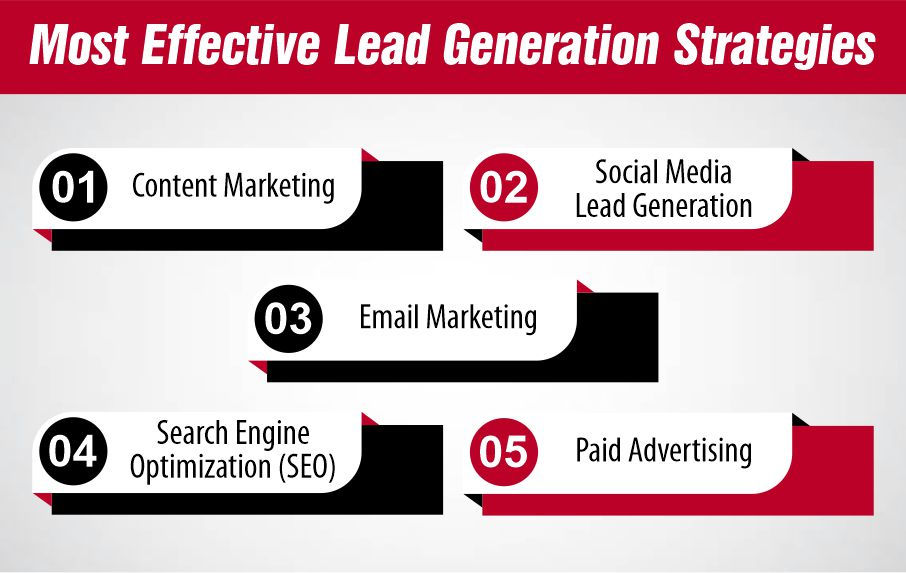
Using the right lead generation strategies is key to attracting the right people and turning them into customers. Effective strategies help businesses save time, reduce costs, and focus on leads that are more likely to convert. With the right approach, even beginners can start generating leads consistently and grow their business.
Content Marketing
Content marketing is creating helpful and valuable content to attract potential customers. This can include blog posts, guides, checklists, or videos. For example, a local service business may write a guide on “how to maintain your home” to get visitors interested. Offering free resources in exchange for contact details is a simple way to start lead generation marketing.
Social Media Lead Generation
Social media platforms like Facebook, Instagram, and LinkedIn are great tools for generating leads. Businesses can share tips, promotions, or lead forms to engage their audience. For instance, a business may run a simple Facebook ad offering a free quote to collect leads. Using social media strategically is one of the easiest ways for small and large businesses to start local lead generation.
Email Marketing
Email marketing helps businesses stay connected with people who have shown interest. After collecting contact information, sending helpful emails or special offers keeps leads engaged. For example, a service company might send a weekly tip or free consultation offer. Consistent email follow-ups turn casual leads into paying customers and improve overall lead generation results.
Search Engine Optimization (SEO)
SEO lead generation helps businesses attract people searching for their services on Google or other search engines. Optimizing your website with relevant keywords makes it easier for potential customers to find you.
For example, a plumbing business using local SEO can attract nearby homeowners actively looking for services. SEO provides long-term, cost-effective results for generating leads.
Paid Advertising
Paid advertising is a fast way to reach potential customers and generate leads. Platforms like Google Ads or social media ads can target people based on location, interests, or search behavior.
Best Practices for Lead Generation
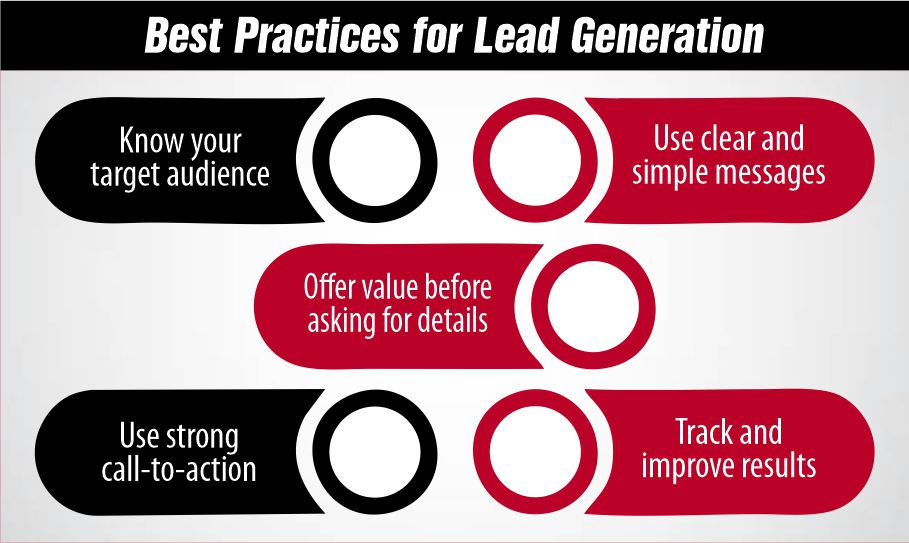
Following best practices for lead generation ensures your efforts bring consistent and high-quality results. Using the right approach helps businesses attract the right people, build trust, and turn interest into paying customers. With these methods, even beginners can start generating leads efficiently and build a strong foundation for long-term business growth.
Know your target audience
Understanding who your ideal customers are is the first and most important step. Knowing your audience allows you to create content, offers, and campaigns that appeal directly to the people most likely to engage with your business. A clear understanding of your audience improves focus and ensures that your lead generation marketing efforts reach the right people consistently.
Use clear and simple messages
Messages should always be easy to read and understand. Avoid complicated language or long paragraphs that may confuse potential leads. Clear and simple messaging helps people understand exactly what you offer and what action they should take next. Using simple communication improves engagement and strengthens your lead generation results.
Offer value before asking for details
People are more willing to share their information when they receive something useful in return. Providing value first builds trust and encourages interaction. This approach ensures that your lead generation services attract quality leads who are genuinely interested in your business.
Use strong call-to-action
A clear and persuasivecall-to-action (CTA) is essential to guide potential leads to take the next step. Strong CTAs make it easier for visitors to understand what to do and increase the chances of conversion. Using effective CTAs consistently strengthens the overall impact of your generating leads efforts.
Track and improve results
Measuring and analyzing results is crucial for success. Tracking metrics allows businesses to see what works, make improvements, and optimize their campaigns. Regular analysis ensures that lead generation strategies remain effective, helping you attract more qualified leads and grow your business efficiently over time.
What Are the Current Trends in Lead Generation?
Lead generation is always evolving, and keeping up with the latest trends helps businesses stay ahead of the competition. Using modern tools and techniques improves efficiency, attracts better leads, and increases conversion rates. Staying updated ensures your lead generation strategies are effective and aligned with how people prefer to interact with businesses today.
AI and automation tools
Artificial intelligence (AI) and automation are transforming lead generation marketing. These tools help businesses identify potential leads faster, segment audiences, and deliver timely messages. Automation reduces manual work and ensures that leads are nurtured consistently, making the process more efficient and scalable.
Chatbots for instant responses
Chatbots allow businesses to respond instantly to visitors on websites or social media. Quick replies keep potential leads engaged and improve the chance of capturing contact details. Using chatbots ensures that lead generation services work around the clock, even when your team is not available.
Video-based lead generation
Video content is becoming a popular way to attract and engage potential leads. Videos explain services clearly and keep visitors interested longer. Incorporating video into your lead generation strategies helps businesses connect better with their audience and encourages more people to share their details.
Personalization in marketing
Personalization means tailoring messages, content, or offers to each individual lead. Customized communication makes leads feel valued and increases trust. Using personalization techniques improves the efficiency of generating leads and strengthens relationships with potential customers.
Mobile-friendly lead forms
More people are visiting websites through mobile devices, so having mobile-friendly forms is essential. Easy-to-fill forms ensure visitors can share their information without frustration. Optimizing for mobile supports local lead generation and makes it easier to capture leads from a wide audience.
Conclusion
Lead generation is essential for any business that wants to grow steadily and attract the right customers. By understanding how lead generation works, using effective strategies, and following best practices, businesses can turn interest into real sales. Staying updated with the latest trends like AI tools, chatbots, video marketing, personalization, and mobile-friendly forms ensures your efforts remain effective.
If you want to boost your lead generation marketing and start seeing real results, our expert team at Phoenix Dial is here to help. Visit our website today to learn more about our lead generation services and how we can help your business grow.
FAQ’s
What is an example of lead generation?
An example of lead generation is when a business offers a free guide or consultation in exchange for a visitor’s contact information. This helps turn interested people into potential customers.
What is the 5-minute rule for leads?
The 5-minute rule means responding to a lead within five minutes of their inquiry. Quick responses increase the chances of converting leads into paying customers.
How much does a lead generation make?
Earnings in lead generation vary widely depending on industry, strategy, and experience. Some professionals earn a few hundred dollars per lead, while agencies can make thousands per month from multiple clients.
What is the 3-3-3 rule in sales?
The 3-3-3 rule in sales suggests contacting a lead within 3 minutes, following up 3 times, and using 3 different communication methods. This approach increases the chances of converting a lead into a customer.