

Did you know most shoppers search online before they buy from a store? This simple fact clearly shows why Retail SEO matters so much today. Many retail businesses offer quality products, fair prices, and good service, but customers still do not find them on search engines. This creates a serious problem. Your website stays hidden, traffic stays low, and sales do not grow.
Phoenix Dial is a service-based company with a strong team of SEO experts who help retail brands solve this issue step by step. We use simple and proven SEO methods that improve visibility and bring the right shoppers to your store. In this post, you will learn how Retail SEO works, why it is important, and how it helps your retail business attract more visitors, leads, and real sales.
What Is SEO for Retail?
SEO for retail means improving a retail website so people can find it on search engines like Google. When someone searches for a product online, SEO helps your store appear in the search results. This brings more visitors who are ready to buy.
SEO for retail focuses on product pages, category pages, and local store information. It helps search engines understand what you sell and who should see it. For example, if someone searches for “sports shoes near me,” good SEO helps the right retail store show up.
This process includes using clear keywords, fast-loading pages, and simple website content. These search engine optimization techniques help both online and physical stores get more visibility. When done right, SEO supports long-term growth and helps retailers reach the right customers at the right time.
Why Are Search Engine Rankings So Important for Retail Sites?
Higher Visibility Brings More Customers
Most shoppers never scroll past the first page of Google. If your retail website appears at the top, more people will see it. Low rankings mean fewer visitors, even if your products are great. High visibility ensures your store reaches potential buyers at the exact moment they are looking for your products.
Builds Trust and Credibility
When your website ranks on the first page, customers automatically trust your brand more. People tend to click on sites that appear higher because they think these sites are more reliable. Strong search rankings create a positive impression and encourage more clicks, helping your store stand out in a crowded market.
Increases Sales Opportunities
High search engine rankings bring visitors who are already interested in buying. This makes how to increase sales through seo much easier for retail businesses. Each click from a search result can turn into a potential sale, meaning better rankings directly contribute to higher revenue.
Helps Compete with Bigger Brands
Even small retail stores can compete with larger companies if they use strong seo for retail websites. Search engine rankings level the playing field, allowing smaller businesses to reach customers without spending heavily on ads. Better rankings mean more traffic, more product views, and more chances to convert visitors into paying customers.
Supports Long-Term Growth
Consistently high rankings provide long-term benefits. Unlike paid ads that stop when the budget ends, good SEO keeps your retail website visible over time. This creates a steady flow of organic traffic, building a strong online presence that supports sustained growth.
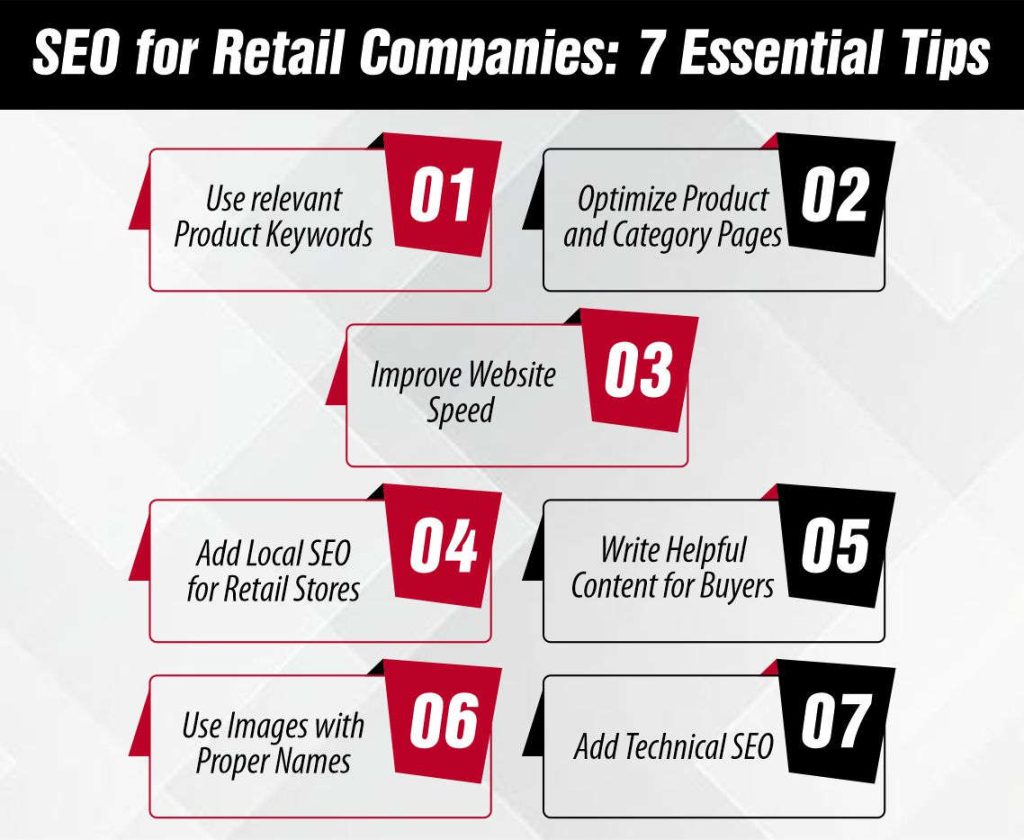
SEO for Retail Companies: 7 Essential Tips
SEO for retail companies is all about making your store visible to customers who are searching online. With the right strategies, you can improve traffic, attract more buyers, and increase sales. Retail SEO focuses on both online and local visibility, ensuring your products appear in search results when people are ready to shop. Implementing the right search engine optimization techniques can make a huge difference for your business growth. Below are seven essential tips that every retail company should follow.
Tip 1: Use Relevant Product Keywords
Keywords are the words customers type when searching for products. Use simple and relevant keywords for each product. Focus on phrases like “running shoes for men” or “organic skincare cream” instead of broad terms. This helps your website rank higher in searches and attract buyers who are ready to purchase.
Tip 2: Optimize Product and Category Pages
Make sure each product and category page is clear and easy to navigate. Write simple product titles, short descriptions, and include key details. Well-organized pages help both customers and search engines understand your offerings. This improves ranking and makes shopping easier for buyers.
Tip 3: Improve Website Speed
A slow website drives customers away. Fast-loading pages keep visitors engaged and reduce bounce rates. Optimize images, reduce unnecessary scripts, and use a reliable hosting service. Quick websites also perform better in search rankings, helping you reach more potential buyers.
Tip 4: Add Local SEO for Retail Stores
If you have physical stores, local SEO is crucial. Use location-based keywords and list your stores on Google Business Profile. Include your address, phone number, and store hours. Local SEO strategies for retail businesses help nearby customers find you quickly, driving both online and in-store traffic.
Tip 5: Write Helpful Content for Buyers
Create content that answers common questions and guides customers. Examples include buying guides, product comparisons, or tips for using your products. Helpful content not only ranks well in search results but also builds trust and encourages purchases.
Tip 6: Use Images with Proper Names
Images can improve SEO when used correctly. Give images descriptive names and add alt text that explains what they show. For example, “red-running-shoes.jpg” is better than “IMG123.jpg.” Proper image SEO helps your products appear in image searches and improves overall page ranking.
Tip 7: Add Technical SEO
Technical SEO ensures your website is easy for search engines to read. This includes fixing broken links, creating a sitemap, using HTTPS, and optimizing URLs. Proper technical SEO supports all other strategies and helps your retail website perform better in search rankings.
Attract More Sales with Retail SEO
If your retail store offers a wide variety of products, it’s important that every page on your website is properly optimized for search engines. Optimizing each page not only improves your search rankings but also brings more visitors to your site and increases the chances of making sales. A well-optimized website ensures that customers can easily find the products they are looking for, whether they shop online or visit your physical store.
We understand that creating and managing a complete SEO strategy can feel overwhelming. Many business owners don’t have the time, experience, or resources to implement all the necessary search engine optimization techniques themselves. That’s where professional help comes in.
Our team of experts at Phoenix Dial is ready to guide retail businesses through every step of SEO. From optimizing product pages to improving site speed and adding local SEO, we help ensure your store reaches the right customers at the right time. With the right strategy, your website can attract more traffic, generate higher sales, and grow your brand online.
Retail SEO vs Paid Ads: Which Is Better
Retail businesses often wonder whether to focus on SEO or paid ads to attract customers. Both methods help bring traffic and sales, but they work in different ways.
SEO (Search Engine Optimization) improves your website’s visibility in organic search results. It helps your store appear naturally when customers search for products. Paid ads, on the other hand, are advertisements you pay for, like Google Ads or social media ads. They appear at the top of search results or on platforms, driving instant traffic to your store.
SEO is best for long-term growth. It works well if you want to consistently attract customers without paying for every click. By using seo for retail websites and optimizing product pages, your store can rank higher in search results over time, bringing steady traffic and ready-to-buy customers. SEO also builds trust because users often prefer organic results.
Paid ads are ideal when you need quick results. For example, if you have a new product launch, seasonal sale, or limited-time offer, ads can bring immediate attention. They are also helpful for targeting specific locations or audiences quickly. Combining paid ads with SEO can maximize visibility and sales, giving your retail business both instant and long-term benefits.
Conclusion
Retail SEO is a powerful way to grow your business online and reach customers who are ready to buy. By optimizing product pages, improving website speed, using local SEO, and creating helpful content, retail stores can attract more visitors, increase sales, and build trust with their audience. Whether you are running an online store, a physical shop, or both, implementing the right SEO strategies can give you long-term results and a steady flow of customers.
If you want expert help to boost your retail business, Phoenix Dial is here for you. Our experienced team specializes in seo for retailers and retail SEO strategies that deliver results. Visit our website today to get started and take your retail business to the next level.
FAQ’s
What is SEO in retail?
SEO in retail is the practice of optimizing retail websites so they appear higher in search engine results. It helps stores attract more visitors, increase sales, and reach customers looking to buy specific products.
What are the 4 types of SEO?
The four types of SEO are On-Page SEO (optimizing content and keywords), Off-Page SEO (building backlinks), Technical SEO (website structure and speed), and Local SEO (targeting location-based searches).
What are the 7 P’s of retail?
The 7 P’s of retail are Product, Price, Place, Promotion, People, Process, and Physical Evidence. These elements help businesses create a complete strategy to attract and satisfy customers.
What is the 80/20 rule for SEO?
The 80/20 rule for SEO means that roughly 80% of your results come from 20% of your efforts. Focusing on the most important keywords, pages, or strategies gives the biggest impact on traffic and sales.