


Did you know that over 70% of banking customers start their search for financial services online, from finding a loan to opening a savings account? The way people search has completely shifted, and banks that don’t appear in top results are missing out on potential clients every single day.
Yet, many banks still struggle to appear on the first page of Google. Outdated websites, weak content, and poor search engine optimization can make even the most reputable banks invisible online. This lack of visibility means lost opportunities, fewer leads, and ultimately, clients going to competitors who have optimized their online presence.
At Phoenix Dial, our team of experts specializes in SEO for Banks. We develop custom strategies that include keyword research, local SEO, content creation, and technical website improvements. By focusing on what your customers are searching for, we help banks increase rankings, drive more qualified traffic, and build trust in the digital space.
In this post, we’ll break down the most effective SEO for Banks techniques, explain how each step works, and show how your financial institution can attract more clients online—without relying solely on paid ads.
What Is SEO for Banks?
SEO for Banks is the process of optimizing a bank’s online presence so it ranks higher on search engines. In simple terms, it helps potential customers find your bank when they search for services like loans, savings accounts, credit cards, or financial advice online.
The banking industry is highly competitive, and most people start their search online. If a bank’s website isn’t optimized, it can be hard for clients to discover its services. Banking SEO ensures that a bank’s website, content, and online listings are structured in a way that attracts the right audience.
SEO for banks involves multiple strategies. These include improving website pages, creating useful content, enhancing local listings, and building trust signals that search engines value. For example, a local community bank can use local SEO for banks to appear higher in Google Maps when someone searches for “bank near me” or “home loan in [city].”
Overall, SEO for banks is about making banking websites more visible, accessible, and trustworthy so that people can easily find the services they need online.
Why SEO Is Important for Banks
SEO for banks is crucial because it helps financial institutions reach more people online. With most customers searching for banking services on Google, having a strong online presence makes it easier for clients to find your bank.
More online visibility: One of the main benefits of SEO is more online visibility. Optimized websites and content rank higher in search results, making your bank noticeable to potential clients. This is especially important for local searches, where local SEO for banks can put your branch in front of nearby customers.
More loan and account inquiries: SEO also leads to more loan and account inquiries. When your pages rank for relevant search terms like “home loan rates” or “best savings account,” interested users are more likely to visit your site and submit inquiries, increasing qualified leads.
Builds long-term trust: Another key advantage is that it builds long-term trust. A bank that consistently appears at the top of search results is seen as credible and reliable. Customers often associate higher search rankings with authority and professionalism, which can strengthen your reputation in the banking industry.
Reduces marketing costs: Finally, SEO reduces marketing costs over time. Unlike paid ads that stop generating traffic once the budget ends, organic search results continue to attract clients without ongoing expenses, making it a cost-effective strategy for banks.
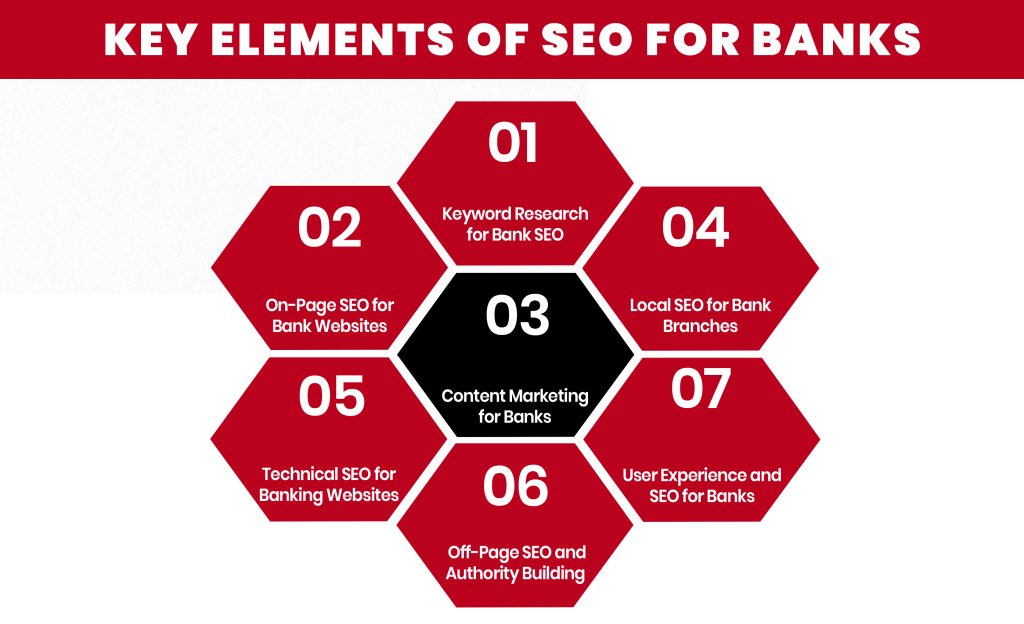
Key Elements of SEO for Banks
SEO for banks is made up of several important elements. Each element works together to improve a bank’s online visibility, attract more clients, and build trust. Understanding these key elements helps financial institutions create a strong SEO strategy for banks that drives results.
Keyword Research for Bank SEO
Keyword research is the first step in any banking SEO campaign. It involves finding the terms potential clients use when searching for banking services, such as “home loans,” “savings account,” or “bank near me.”
Using the right keywords ensures your website ranks for searches that matter. Banks often include service-based keywords and location-based keywords to target local clients. Proper keyword research helps guide website content, blog topics, and marketing strategies.
On-Page SEO for Bank Websites
On-page SEO focuses on optimizing individual web pages to improve rankings. This includes:
- Writing clear page titles and headings with relevant keywords
- Using meta descriptions that describe the page content
- Structuring URLs to be easy to read
- Adding internal links between related pages
Bank SEO ensures each page is optimized for both users and search engines, helping potential clients find information quickly.
Content Marketing for Banks
Content is essential for seo banking. Creating helpful and educational content builds trust and attracts visitors. Banks can create:
- Guides explaining loan processes
- Comparisons of account types
- Tips on financial planning
- FAQs for common banking questions
High-quality content not only improves rankings but also positions banks as reliable authorities in the banking industry SEO space.
Local SEO for Bank Branches
Local SEO helps banks attract customers in specific geographic areas. Key strategies include:
- Optimizing Google Business Profile listings
- Adding branch-specific landing pages
- Collecting and responding to reviews
- Using local keywords like “community bank in [city]”
Local SEO for banks ensures branches appear in local search results and Google Maps, making it easier for clients to find services nearby.
Technical SEO for Banking Websites
Technical SEO improves website performance and ensures search engines can crawl and index your pages. Important elements include:
- Fast website loading speed
- Mobile-friendly design
- Secure HTTPS website
- Clean website structure with proper navigation
Optimizing these technical aspects of seo for banking helps improve rankings and user experience.
Off-Page SEO and Authority Building
Off-page SEO focuses on building credibility and authority outside your website. For banks, this can include:
- Backlinks from trusted financial websites
- Listings in directories and industry portals
- Press mentions or guest posts
Building authority signals that your bank is trustworthy, which helps improve rankings in both local and organic search.
User Experience and SEO for Banks
A good user experience is critical for seo services for banks. Key factors include:
- Easy navigation and clear menus
- Simple forms for account openings or inquiries
- Accessible and readable content for all users
- Fast-loading pages
When users can easily find what they need, they are more likely to stay on your website, reducing bounce rates and improving search engine rankings.
SEO Strategies for Banks
Effective SEO for Banks requires a combination of strategies that target both search engines and potential clients. By implementing the right techniques, banks can improve visibility, attract qualified leads, and build long-term trust with customers. Below are the most important strategies for banking websites and branches.
Focus on Local SEO for Branches
Local SEO is essential for banks because most clients search for financial services near them. This includes optimizing branch pages, using location-based keywords, and appearing in Google Maps results. Local SEO for banks ensures that people searching for “bank near me” or “[city] savings account” can easily find the nearest branch.
Create Separate Pages for Each Service
Each banking service—such as loans, savings accounts, or credit cards—should have its own dedicated page. This helps search engines understand what your bank offers and allows potential clients to find specific services easily. Creating separate service pages is a key part of banking SEO and helps improve rankings for targeted searches.
Publish Educational Content
Content that educates customers builds trust and authority. Banks can publish blogs, guides, or FAQs explaining financial topics like:
- How to apply for a home loan
- Differences between account types
- Tips for financial planning
This type of content is important for financial institutions because it answers real customer questions while improving search engine visibility.
Optimize Google Business Profile
A well-maintained Google Business Profile helps branches show up in local search results. Include:
- Accurate NAP (Name, Address, Phone)
- Branch hours and services
- Photos and posts
- Reviews from customers
Optimizing profiles is a major strategy in community bank SEO company efforts and improves local credibility.
Improve Website Speed
Fast-loading websites improve user experience and search engine rankings. Banks should ensure their site loads quickly on both desktop and mobile devices. Bank SEO benefits from technical optimization like compressing images, reducing scripts, and using reliable hosting to keep pages fast.
Earn Trust Through Reviews
Online reviews help build credibility and improve rankings. Encouraging customers to leave honest feedback on Google and other directories strengthens your online reputation. SEO banking strategies often include review management to show search engines that your bank is reliable and trusted by the community.
Conclusion
SEO for banks is no longer optional—it is essential for financial institutions that want to grow their online presence, attract more clients, and build trust in a competitive market. By focusing on strategies like local SEO, optimized service pages, educational content, Google Business Profile optimization, fast website performance, and review management, banks can improve visibility and generate more qualified leads.
Investing in SEO for Banks ensures long-term results and helps financial institutions stay ahead in the digital space. For expert guidance and customized banking SEO solutions, visit Phoenix Dial to see how our team can help your bank rank higher, attract more clients, and grow online.
FAQ’s
What is SEO in banking?
SEO in banking is the process of optimizing a bank’s website and online content so it ranks higher in search engines. It helps banks attract more clients looking for loans, accounts, or other financial services online.
What is the 80/20 rule for SEO?
The 80/20 rule in SEO means that 80% of your results often come from 20% of your efforts. Focusing on the most effective keywords, content, and strategies can deliver the majority of your traffic and leads.
What are the 4 types of SEO?
The four main types of SEO are:
- On-Page SEO: Optimizing content and pages on your website.
- Off-Page SEO: Building backlinks and online authority.
- Technical SEO: Improving site speed, security, and structure.
- Local SEO: Targeting location-based searches to attract nearby clients.
What are the 3 C’s of SEO?
The 3 C’s of SEO are Content, Code, and Credibility. Content focuses on valuable information, code ensures the website is technically optimized, and credibility builds trust through links, reviews, and authority.